
A family in a classic Yonkers colonial pulls up the old wall‑to‑wall carpet and uncovers beautiful hardwood on the stairs and in the hallway. The floors clean up nicely, but the bare treads feel noisy and a little slippery, especially in winter when everyone tracks in salt and grit. They want a stair runner that feels secure underfoot and looks like it belongs with the original wood, not something that fights it.
Coordinating runners with hardwood is part design, part practicality. Here’s how to get it right.
Start with the Hardwood Tone and Grain
The most important decision happens before you even look at fabrics: understanding what your wood is doing visually. Mid‑tone oak hardwood is common in Westchester homes and has a distinct grain that already brings pattern to the staircase. Strongly patterned runners on top of heavily grained wood can feel busy.
Look at the floor and steps in natural light and decide whether they read warm (honey, amber, red) or cool (taupe, gray, espresso). A warm floor usually pairs best with cream, beige, or muted rust in the runner, while cooler stains work with charcoal, soft blues, and greige. If you’re still deciding on new flooring, the hardwood flooring guide can help you narrow species and stain families before you start thinking about textiles.
Use Pattern and Texture to Solve Real Problems
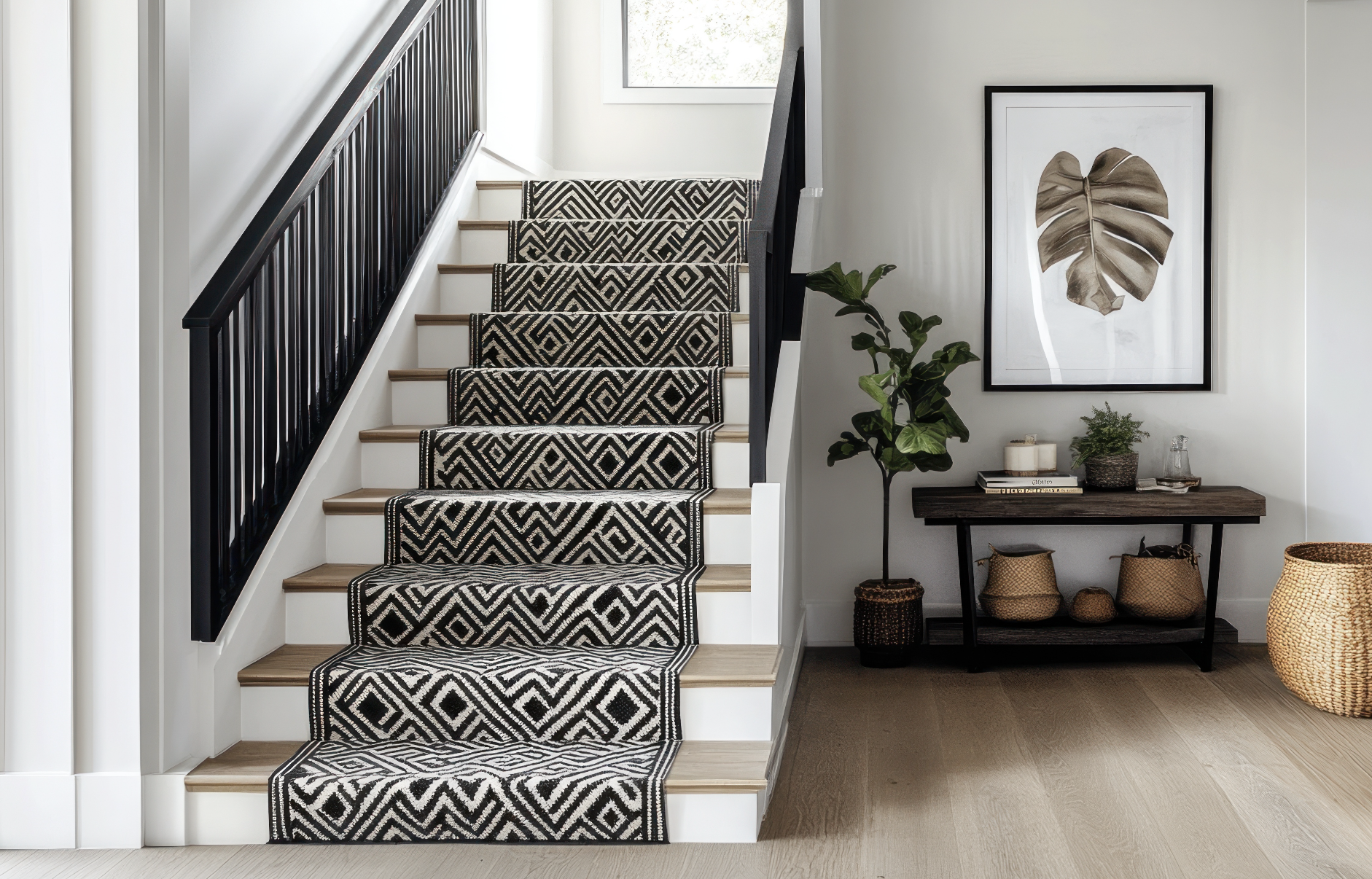
Stair runners are not just decorative. In a high‑traffic Yonkers staircase, pattern hides soil from road salt and city dust, and texture adds grip. Subtle herringbones, pinstripes, or small‑scale geometrics disguise wear far better than a flat solid color, which tends to show every footprint.
Looped constructions and low‑pile wool blends give you that refined texture without feeling rough. Many homeowners look at Stanton designer rugs for runner material because the patterns feel tailored rather than loud. If your hardwood has a smooth finish, a more dimensional runner balances the surface and reduces the sense of slipperiness on the treads.
Balance Contrast for a Clean, Architectural Look
The amount of contrast between runner and floor changes the whole staircase. High contrast — for example, a light runner on dark engineered hardwood — outlines each tread and makes the staircase a focal point. Low contrast, where the runner sits just a few shades away from the floor, reads quieter and more understated.
Homes with narrow, enclosed staircases often benefit from lower contrast so the space doesn’t feel chopped up. More open entries or split staircases can handle bolder combinations. If your main level also uses rugs, it helps to coordinate with those patterns; the area rug styles guide is a helpful reference for seeing how different motifs behave in a room before echoing them on the stairs.
Think Beyond the Staircase: Hallways, Landings, and Adjoining Rooms
In many Westchester layouts, the stair runner flows visually into an upstairs hallway or a living room with hardwood and area rugs. Treat the entire path as one composition. The runner, hall rug, and main living room rug should share at least one element: color, pattern scale, or texture.
This is where professional help pays off. Allen Carpet & Home offers interior design services that connect your staircase with adjacent spaces, so the runner doesn’t feel like an afterthought. Designers can pull together hardwood samples, runner materials, and rug options on the same table and show how they’ll read under your home’s actual lighting.
Why Custom Stair Runners Matter in Westchester Homes
Pre‑war and mid‑century staircases across the county rarely follow today’s standard dimensions. Curves, winders, and irregular landings demand careful templating so patterns stay centered and edges feel intentional. Professionally planned custom stair runners allow for proper overhang, secure installation, and pattern placement that respects the architecture instead of fighting it.
A well‑chosen runner also protects your hardwood from Lower Hudson Valley winters. Salt crystals and fine grit tend to collect on the front edge of each tread; covering that wear point extends the life of both original and newly installed wood. For homeowners comparing species and finishes, browsing wide‑plank hardwood alongside potential runner materials can clarify how much of the wood you want visible on either side of the textile.
A coordinated stair runner should feel like it has always belonged with your hardwood, while quietly handling noise, safety, and winter wear. Allen Carpet & Home can help you choose the right wood, runner material, and pattern for your staircase and adjoining rooms. Visit our Yonkers showroom or our locations in Mohegan Lake and Mount Kisco, or schedule your free estimate to start planning your staircase update.

