
Picture a busy school morning in a Mohegan Lake colonial: kids racing downstairs with backpacks, the dog right behind them, everyone tracking a bit of salt and slush from the garage. On mornings like this, the difference between a safe staircase and a slippery one comes down to details many homeowners overlook — namely, stair runners and hallway runners.
Both protect hardwood and help manage Westchester’s winter mess, but they solve slightly different problems. Understanding those differences makes it much easier to invest wisely.
How Stair Runners Improve Safety on Wood Steps
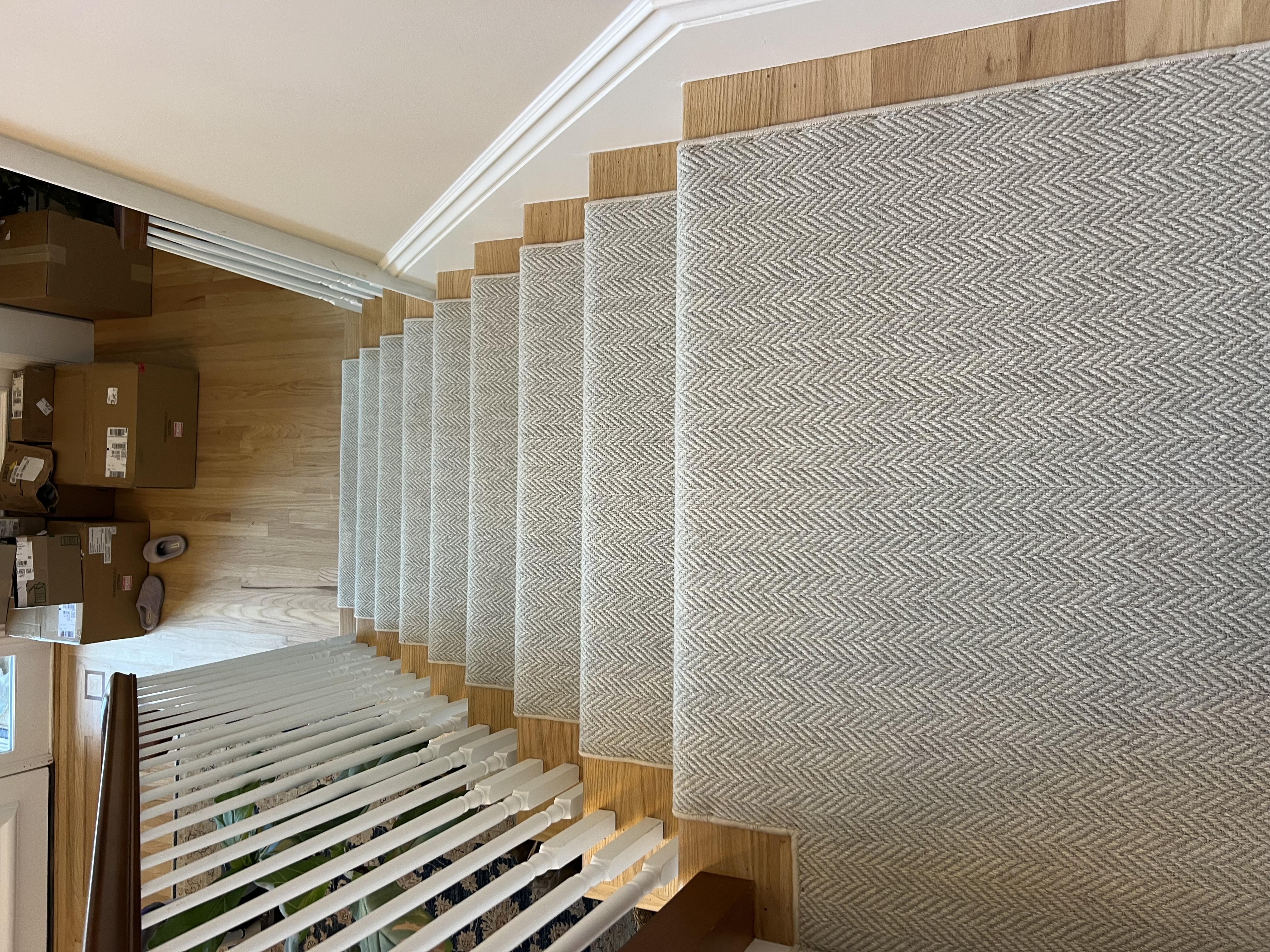
Bare hardwood treads look beautiful, yet they can feel slick, especially with socks, smooth-soled shoes, or damp feet. Stair runners add a continuous strip of grip down the center of the staircase, reducing slip risk without hiding the wood entirely.
Material and construction matter here. Dense, low‑pile designs offer secure footing and stand up to the constant impact of foot traffic. If you’re comparing fibers and constructions, Allen Carpet & Home’s area rug guide explains how different materials behave under daily wear.
Beyond traction, runners also soften each step. That extra cushioning is a relief for knees and a smart upgrade for multigenerational households. In many Westchester homes with original hardwood, a runner also protects the leading edge of each tread from chipping and premature refinishing, which pairs nicely with long-term plans for hardwood flooring throughout the home.
For a deeper look at patterns, edge finishes, and installation approaches, the dedicated overview of stair runner options walks through how custom runners are measured, fabricated, and installed on straight and curved staircases.
Where Hallway Runners Make the Biggest Difference
Hallway runners address a slightly different safety concern: long, smooth stretches of hardwood that become slick and noisy. In a Yonkers apartment or a Mount Kisco Tudor with narrow corridors, a properly sized runner keeps feet stable and helps define the path through the space.
Because these pieces aren’t confined by stair dimensions, you can play more with pattern and color. A subtle geometric runner can visually lengthen a short hall, while a traditional motif suits older Westchester architecture. If you want to see the range of patterns and fibers, browsing the selection of hallway runners gives a sense of how much design variety exists within this one category.
Hallways also take the brunt of grit and salt during winter. A runner acts as the first line of defense, catching debris before it scratches the surrounding hardwood. That protective role is especially useful near entries, side doors, and the route from the garage into the kitchen.
Coordinating Runners with Your Hardwood Floors
Stair and hallway runners work best when they feel intentionally connected to the hardwood beneath them. Color, scale of pattern, and texture should all relate to the flooring species and stain in a way that feels cohesive rather than matching exactly.
If your home has classic oak floors, you might balance the grain with a quieter pattern; bolder designs often pair well with smoother, darker stains. For homeowners exploring new oak flooring options, planning runners and wood together avoids clashing undertones later.
Design decisions can feel overwhelming, especially in larger homes where multiple staircases and hallways intersect. Allen Carpet & Home offers interior design services that help tie runners, hardwood, paint, and furnishings into a single, well-considered plan, so the transitions from stair to landing to hall feel seamless.
Maintenance and Longevity in Westchester’s Climate
Both stair and hallway runners face concentrated wear, so realistic expectations and simple routines go a long way. Regular vacuuming, prompt attention to salt and moisture, and occasional professional cleaning keep fibers from breaking down prematurely. For a more detailed look at care routines, the area rug care guide covers cleaning methods that protect both the rug and the hardwood underneath.
Backing and padding also influence safety and longevity. Proper underlayment keeps runners from shifting and adds a bit of insulation, which is noticeable during cold Hudson Valley winters on over-garage rooms or uninsulated staircases.
Stair runners and hallway runners each solve different but related safety issues, and many Westchester homes benefit from using both. If you’d like help deciding what makes sense for your layout, the teams in our Mohegan Lake showroom, Yonkers, and Mount Kisco can walk you through options that respect both safety and style. When you’re ready to explore specific products and measurements, you can schedule your free estimate and have an Allen Carpet & Home professional assess your stairs and halls in person.

