

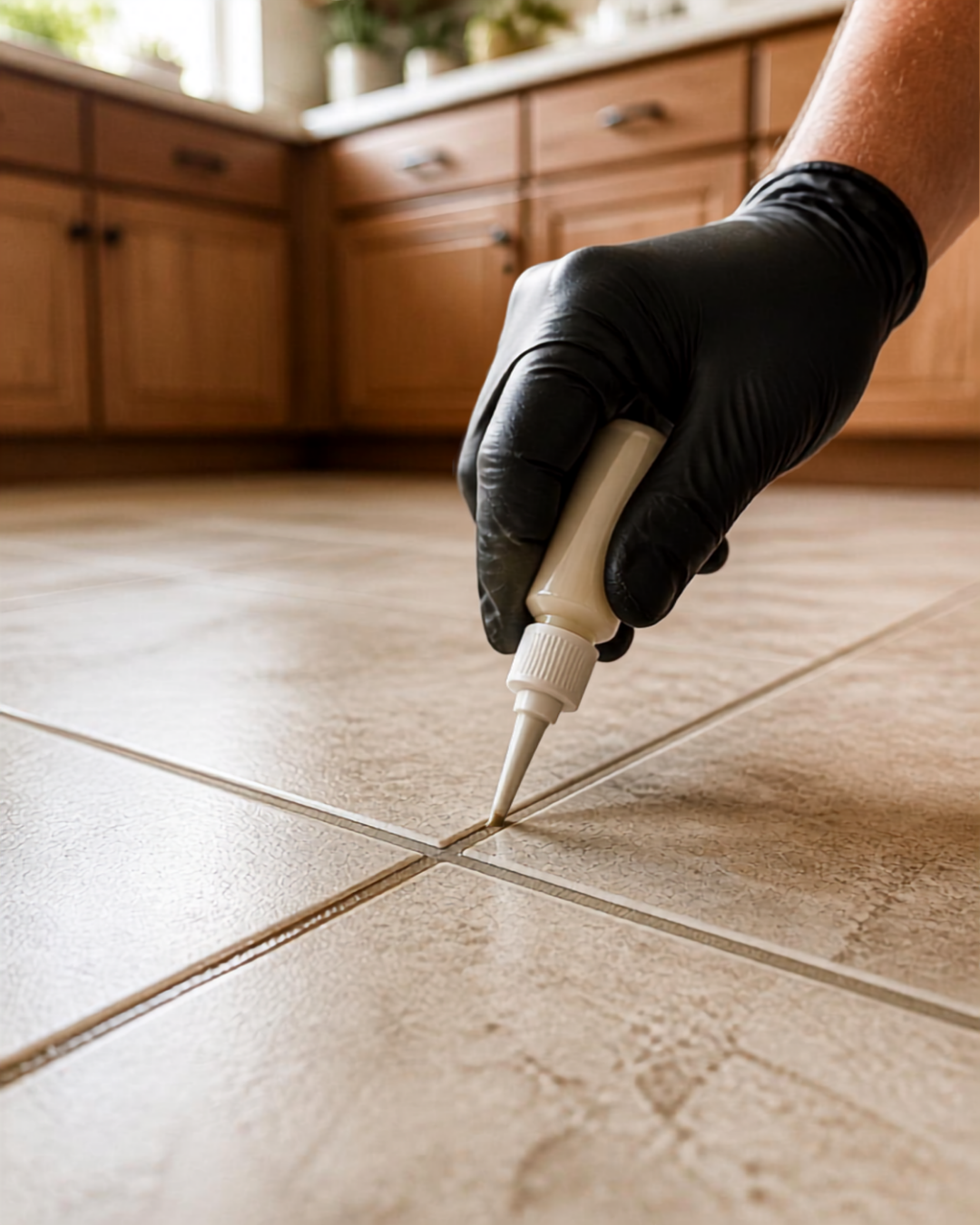
Most glazed porcelain and ceramic tile never needs sealing, while most natural stone and cement grout do. That single split is where the usual advice goes wrong. Plenty of people spend a Saturday coating a glazed porcelain floor that already sheds water, then leave the porous grout lines and a marble threshold to soak up every spill. Sorting the surfaces in a real Westchester home into seal-it and skip-it takes about two minutes and a few drops of water, once you know what you're looking at. Our humid summers and salted winters decide how often to look again.
Which Tile and Stone Surfaces Actually Need Sealing?
Sealing need comes down to one property: how much water the surface soaks up. Porcelain tile is defined by the Tile Council of North America (TCNA), the trade group that writes the U.S. ceramic tile standards, as an impervious tile that absorbs 0.5% or less of its weight in water under the ASTM C373 test. At that porosity a sealer has nowhere to go. Natural stone is the other extreme. Marble, limestone, and travertine are calcareous stones that drink up liquid and etch when an acid touches them, so they earn a sealer. Cement grout sits in the same porous camp as the stone. The table below lines up the numbers so the cutoff is easy to see.
| Surface | Water absorption | Main risk | Sealer? |
|---|---|---|---|
| Glazed porcelain or ceramic | 0.5% or less | Little to none | Not needed |
| Cement grout | Porous | Stains, dirt | Recommended |
| Epoxy grout | Non-porous | Little to none | Not needed |
| Granite | Up to 0.40% | Staining | Often |
| Slate | Up to 0.25% | Staining, flaking | Often |
| Quartzite | Up to 1% | Staining | Sometimes |
| Marble | Around 0.20% | Etching, staining | Yes |
| Limestone | 3% to 12% | Etching, staining | Yes |
Why Glazed Porcelain and Ceramic Don't Need a Sealer
Glazed porcelain and glazed ceramic don't need a sealer because the wear surface is already glass. A glaze is a coating fused to the tile in the kiln, and on porcelain the body underneath absorbs 0.5% or less of its weight in water. Water sits on top and wipes off. Pour a sealer on it and nothing soaks in; the product dries into a faint haze that catches footprints and eventually has to be stripped back off. Not every ceramic tile is that tight, though. ANSI A137.1, the American national standard for ceramic tile, sorts tile by absorption from impervious at 0.5% or less, up through vitreous and semi-vitreous, to non-vitreous tile that drinks in more than 7%, and the glaze is what keeps water out of the more porous bodies. On a glazed floor the one gap left is the grout between the tiles. Seal the grout instead.
Why Natural Stone and Cement Grout Usually Do
Natural stone and cement grout usually need sealing because both are porous enough to stain, and stone hides a second problem the absorption number misses. By ASTM International's dimension-stone specs, sound marble tops out near 0.20% water absorption and granite near 0.40%, with slate around 0.25% and quartzite around 1%; limestone runs from about 3% for a dense grade up to 12% for a low-density one. Those percentages look tiny. Yet marble, limestone, and travertine are calcareous, and the calcite in them etches and dulls the instant an acid lands, sealed or not. A sealer buys you time to wipe a spill before it soaks in. It does not make the stone bulletproof. The Natural Stone Institute, the industry's trade body, puts it plainly: the products sold as stone sealers are impregnators that repel liquid rather than truly seal it, so sealing makes a floor stain resistant without ever making it stain proof. Cement grout, sanded or unsanded, is openly porous and soaks up water, spills, and grime. The lone exception is epoxy grout, a two-part resin that cures non-porous and never wants a sealer.
How to Tell If Your Floor Is Already Sealed
The fastest way to tell whether a stone floor or grout line is sealed is a water test that takes two minutes. Drop a small puddle of water on a grout line and on a bare patch of stone, wait a minute or two, and look. Water beads or it soaks in. If it beads up and sits there, the surface is still repelling liquid and you can leave it alone; if it soaks in and darkens the material, the sealer is worn or was never applied, and it's time to reseal. Do it in a few places, because a floor wears unevenly. The strip in front of a sink or a stove gives up its sealer years before the corner behind a door does. This test beats any calendar, since a sealer's life depends on traffic and on how the floor gets cleaned. Test, don't guess.
How the Hudson Valley Climate Changes the Timing
Hudson Valley conditions push the reseal timing in two directions at once. Humid summers keep a porous grout line or a stone threshold damp longer after every mop and every shower, and a damp porous surface is where mildew and staining begin; in a Mount Kisco bathroom that runs muggy from June through September, the water test is worth repeating at both ends of the season. Winter brings the opposite stress. Road salt and slush ride in on boots, and freeze-thaw swings punish anything porous that sees the outdoors. Tracked-in grit makes it worse, because that grit is mostly quartz, which sits at 7 on the 10-point Mohs hardness scale and scratches a marble surface that barely rates a 3. For a covered porch or entry in Mohegan Lake, dense tile earns its keep: ASTM International's C1026 freeze-thaw test exists to sort which tile survives repeated freezing outdoors, and the impervious porcelain that passes it shrugs off salt with no sealer at all. One habit protects every sealed surface: keep a neutral cleaner on hand, because on the pH scale that runs 0 to 14, water sits at 7 and vinegar and citrus fall far down the acid end where they strip sealers and etch stone.
Sealing New Tile and Grout the Right Way
New grout has to cure before it takes a sealer, and rushing that step traps moisture underneath. Grout makers generally call for waiting 48 to 72 hours after grouting before sealing, so the cement can dry and gain strength. When the time comes, a penetrating impregnator is the product for stone and cement grout; it soaks in and coats the pores instead of leaving a film on top, and two thin coats usually beat one heavy one. Sealing is not a service we offer at Allen Carpet & Home, and we'll say so plainly: resealing is homeowner upkeep or a job for a stone-care specialist. What we do is help you pick a material whose upkeep matches your life. If you would rather skip sealing for good, glazed porcelain paired with epoxy grout is the low-maintenance route, and it pays to walk the tile we stock and the natural stone we carry with those trade-offs in mind before a finish talks you into more work than you want.
Questions We Hear About Sealing Tile and Grout
Does sealing make grout waterproof?
Sealing does not make grout waterproof; it makes cement grout more stain resistant and easier to wipe. Water and time still work through a sealed cement joint, which is why a real shower relies on a waterproof membrane behind the tile rather than on the grout. If you want a joint that shrugs off water on its own, epoxy grout cures non-porous and skips sealing entirely, at a higher price and a fussier install.
Can you seal glazed porcelain tile?
Sealing glazed porcelain accomplishes nothing useful, because the glazed surface takes in almost no water and a sealer cannot penetrate it. A coat of sealer on glazed tile dries into a haze that shows every footprint and later has to be stripped. Save the sealer for the grout lines and any natural-stone accents set into the same floor.
How often should I reseal a stone floor?
Reseal a stone floor when it fails the water test rather than on a fixed schedule, because wear sets the interval. A busy kitchen path might need attention inside a year, while a guest bath can go far longer. Check the high-traffic strips a couple of times a year, reseal the spots that soak up water, and skip the rest.
Planning a Tile or Stone Floor in Westchester
Choosing a tile or stone floor is really choosing how much upkeep you're signing up for, and that is a conversation worth having before you buy. A glazed porcelain floor with the right grout can go decades on a mop and no sealer; a marble or limestone floor gives you a look nothing else matches and asks for care in return. If you're weighing hard surfaces for a Westchester kitchen or bath, our overview of tile, stone, and glass tile for kitchens and baths is a good place to start. As a family-owned shop four generations in, with three Westchester showrooms and the county's largest in-stock selection, we sell and install the tile and natural stone and help you weigh the trade-offs honestly. When you're ready to price a floor and talk through the upkeep it will really need, request a free in-home estimate and we'll measure the rooms and lay out your options.

