

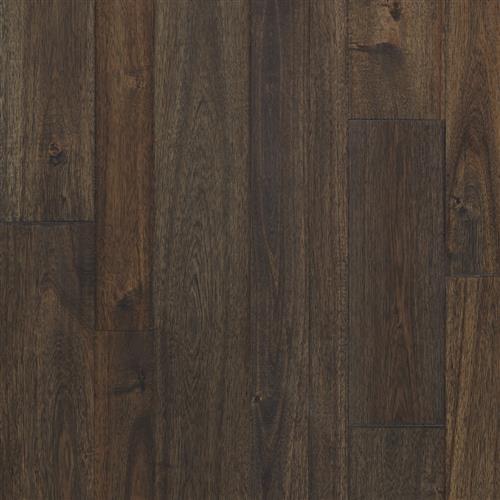
You walk across your living room in January and notice a sliver of dark space between two boards that sat flush all summer. A week later, you spot another. By February, you're convinced the floor is pulling itself apart. If this sounds familiar — especially in a Mohegan Lake colonial or a 1920s Yonkers home — you're not alone. Hardwood movement is one of the most common flooring concerns in the Lower Hudson Valley, and most of the time, it's not a defect. It's physics.
Why Hardwood Moves
Wood is hygroscopic — it absorbs and releases moisture from the air around it. When relative humidity drops, the boards lose moisture and shrink. When humidity climbs, they swell. In Westchester County, the seasonal swing is dramatic: furnace-driven indoor air in winter can plunge below 25% relative humidity, while summer months routinely push past 70%. That's a wider range than most of the country experiences, and solid hardwood bears the full brunt of it.
The result? Gaps in winter, tight seams in summer, and an annual rhythm that can alarm homeowners who haven't seen it before. Understanding the fundamentals of how hardwood flooring responds to its environment takes the mystery out of those seasonal changes — and helps you separate normal behavior from real trouble.
Gaps vs. Cupping: Two Different Problems
A gap is a separation between boards along their long edges or ends. When it appears in dry winter months and closes up by May, it's normal seasonal movement. Gaps that persist year-round may signal that the wood was installed before it had time to acclimate to your home's conditions, or that the subfloor is too dry.
Cupping looks different. The edges of each board curl upward, creating a concave profile across the plank — like a shallow U. This almost always means moisture is coming from below: a damp basement, a crawl space without a vapor barrier, or a concrete slab that wasn't fully cured before installation. Unlike seasonal gaps, cupping does not fix itself and usually points to a problem that needs addressing before the floor can be corrected.
One of the most effective ways to reduce both issues in Westchester's variable climate is choosing a more dimensionally stable material from the start. The cross-ply construction of engineered hardwood resists expansion and contraction far better than solid wood, making it an especially practical choice for kitchens, basements, and homes with radiant heat — all scenarios where moisture and temperature swing harder.
Prevention and When to Act
You can't stop wood from responding to humidity, but you can narrow the range. Keeping indoor relative humidity between 35% and 55% year-round — with a whole-home humidifier in winter and dehumidification in summer — dramatically reduces seasonal gapping. Simple habits help too: cleaning hardwood with the right methods and products prevents excess moisture from pooling on the surface during routine care, which protects the finish and the wood beneath it.
So when should you take action? Call a professional if gaps exceed the thickness of a nickel and don't close during humid months, if cupping is visible across multiple planks, or if boards have begun to crack or lift at the edges. These are signs that the underlying issue — subfloor moisture, poor acclimation, or structural movement — needs professional diagnosis.
Hardwood floors breathe with the seasons. A little movement is part of living with a natural material in a climate as dynamic as the Hudson Valley's. But when the changes go beyond cosmetic, addressing them early protects your investment. Visit our showroom in Mohegan Lake or stop by our Yonkers or Mount Kisco locations to talk through your floors with someone who understands Westchester homes inside and out — or schedule a free estimate and we'll come to you.

