

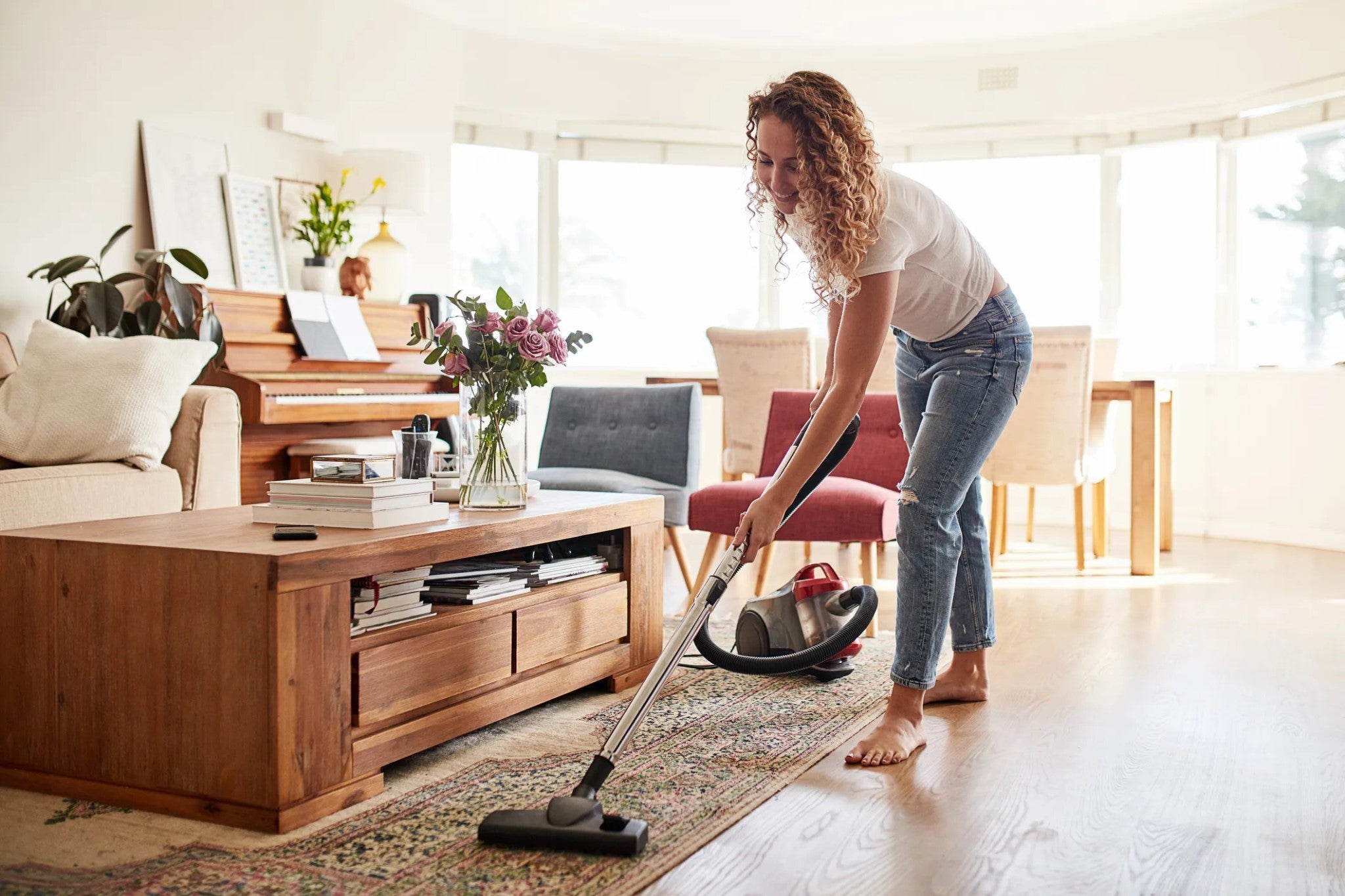
A homeowner in Mohegan Lake recently noticed something troubling: fine scratches spreading across the living room hardwood, all tracing the same path as the vacuum cleaner. The floors were clean — nobody could fault the housekeeping — but the tool meant to protect them was quietly doing the opposite. It's a common problem, and one that almost always comes down to technique rather than equipment.
Choose the Right Vacuum Setting for Hardwood
The rotating brush roll that powers through carpet fibers is hardwood's worst enemy. Those bristles spin at thousands of RPMs, flinging abrasive particles across the finish with every revolution. Over months of weekly cleaning, the cumulative effect is a dull haze where the light once reflected cleanly.
The fix is simple but often overlooked: disengage the beater bar entirely. Most upright vacuums have a switch that stops the brush roll and shifts to suction-only mode. If yours doesn't, a canister vacuum with a dedicated hard-floor attachment is worth the upgrade. Some newer models use soft microfiber rollers designed specifically for sealed wood — these are safe, provided the roller stays clean and free of trapped grit.
Beyond the vacuum itself, routine care matters just as much. Dust and fine debris act like sandpaper under foot traffic, which is why daily sweeping or dust-mopping between vacuum sessions makes a real difference. For a deeper look at protecting your investment, our hardwood floor cleaning guide covers the full maintenance routine, from cleaning products to seasonal adjustments.
Vacuuming Area Rugs Without Pulling Fibers
Area rugs demand a completely different approach. Where hardwood wants distance from the brush roll, many rugs need controlled contact — but only in one direction and with the right pressure.
Wool rugs are especially vulnerable. Those luxurious fibers shed naturally, and an aggressive vacuum set to the wrong height will accelerate the loss. Always set the brush to its highest position on wool, or better yet, use suction-only with an upholstery attachment. Vacuum with the nap — not against it — and skip the fringe entirely; those delicate edges belong to hand-cleaning, not machine agitation.
Synthetic rugs are more forgiving but still benefit from a lighter touch. Even durable polypropylene and polyester constructions can develop pulled threads if the beater bar digs in too aggressively. The same suction-only approach works here, and it's worth rotating the rug a few times a year so wear patterns don't concentrate in one high-traffic lane.
For a complete overview of fiber types, padding choices, and seasonal care routines, our area rug maintenance guide walks through everything from spot cleaning to professional deep cleans. If you're considering an upgrade, wool area rugs reward careful owners with decades of warmth and character.
The Entryway Defense: Stop Grit Before It Spreads
Westchester County winters turn driveways and sidewalks into salt-and-sand delivery systems. Every pair of boots that crosses the threshold carries abrasive particles onto the hardwood — and once that grit is there, every step grinds it deeper into the finish.
A well-placed area rug or runner at each entry point catches the majority of this debris before it ever reaches the wood. Vacuum these entry rugs more frequently than the rest of the house — twice a week during winter months, or after any heavy snow — because they're doing the hardest work. A thin hallway runner with a low-profile non-slip pad underneath traps dirt without creating a tripping hazard, and it's far easier to vacuum or shake out than to refinish scratched floors come spring.
The same principle applies during summer, when tracked-in pollen and fine Hudson Valley dust settle into floorboard gaps. Year-round diligence at the entry point preserves the finish everywhere else.
Most vacuum damage to hardwood and area rugs isn't the result of a single mistake. It builds quietly, pass after pass, until one day the light catches the scratches and the fibers look thinner than they should. Adjusting your vacuum settings takes seconds — disengaging the brush roll, switching attachments, slowing down on wool — but the payoff is measured in years of preserved flooring.
If your floors are showing more wear than they should, or you're ready to explore materials that hold up better to daily life, our team at Allen Carpet & Home can help. Visit one of our three showrooms across Westchester County — or schedule a free in-home estimate and we'll come to you.

