
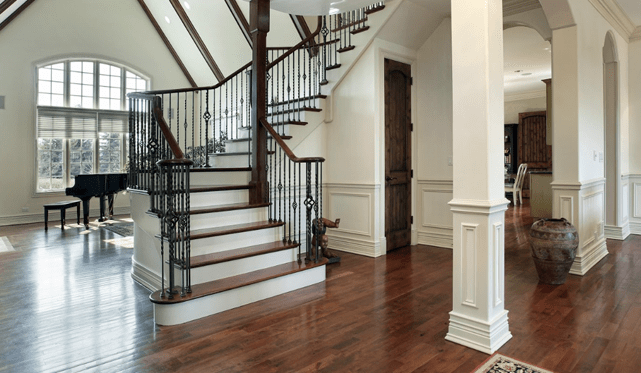
On a January morning in Mohegan Lake, you might crank up the heat, watch the snow fall, and notice tiny gaps between your hardwood planks. By August, with the air thick and humid, those same boards can swell and lightly cup. That constant push and pull is exactly why understanding our Lower Hudson Valley climate is essential if you want hardwood floors that look beautiful for decades, not just a few seasons.
How Temperature and Humidity Stress Hardwood
Hardwood is a natural material that constantly responds to moisture in the air. In Westchester, we ask a lot of it: dry, heated air in winter, then sticky humidity all summer.
In winter, indoor humidity often drops below 30%. Boards lose moisture, shrink, and may show gaps or minor surface checks. In summer, humidity rises and wood absorbs moisture, expanding and sometimes cupping at the edges. Allen Carpet & Home’s hardwood flooring guide explains how different constructions and species handle this movement.
Engineered planks are built with cross-layered cores that resist expansion and contraction better than traditional solids. For homes in Yonkers with older radiators or fluctuating building heat, engineered hardwood flooring usually delivers a more stable, longer-lasting installation than solid boards of the same width.
Winter: Salt, Grit, and Dry Air
Snowy sidewalks and heavy road salt are some of the biggest enemies of hardwood in this region. Every trip through the front door brings in abrasive grit that can scratch finish, plus salty slush that can discolor boards over time.
Entryways and mudrooms benefit from a layered defense: rigid mats at the door, frequent sweeping, and prompt wipe-ups of melted snow. For the rest of the main level, routine care matters just as much. The hardwood cleaning guide outlines safe products and techniques that remove winter residue without stripping finish or forcing water into seams.
Dry winter air is the other challenge. Humidifiers, either whole-house or room-based, help keep relative humidity in a range where wood movement stays minimal. That single habit can add years to the life of wide-plank oak or maple.
Summer: Humidity, Basements, and Species Choice
From June through September, Westchester’s humidity rises sharply. Above-grade rooms with air conditioning usually stay comfortable for hardwood, but basements and garden levels tell a different story.
Below grade, concrete slabs and foundation walls can feed moisture into flooring from underneath. In those spaces, homeowners in Mount Kisco are usually better off with waterproof materials rather than solid hardwood. The team at Allen Carpet & Home often steers clients who love the wood look toward waterproof luxury vinyl or certain engineered products specifically rated for those conditions.
Even on upper floors, species and texture matter. Oak tends to handle seasonal swings more predictably than some exotics, and a light wire-brushed hardwood can disguise minor seasonal movement better than a mirror-smooth finish.
Design Decisions That Protect Lifespan
Thoughtful design choices can quietly extend the life of your floors. Area rugs in high-traffic living rooms, proper felt pads under furniture, and well-planned transitions between rooms all reduce stress on the surface.
On staircases, custom stair runners soften impact and protect treads in a way that bare wood never can, especially in busy households. If you’re coordinating flooring with wall color, rugs, and existing millwork, Allen Carpet & Home’s interior design services help you choose hardwood species, stains, and sheens that suit both the architecture and the realities of our climate.
Hardwood can absolutely thrive in Westchester’s demanding weather if it’s selected and installed with the environment in mind. For guidance tailored to your home, you can visit our Mohegan Lake showroom or our Mount Kisco showroom—or simply schedule your free estimate to have a specialist come to you.

