

A laminate floor's AC rating tells you how long its clear top layer stands up to foot traffic before the printed wood pattern starts to wear through. AC3 is rated for every room in a typical home, AC4 adds a margin for kitchens, entries, dogs and rentals, and AC5 is built for commercial floors. Every Mohawk laminate in our catalog is rated AC4.
AC3 is enough for most rooms in a home. Bedrooms, living rooms and hallways in a normal household won't wear through an AC3 floor.
AC4 is the pick for the busiest rooms. It is rated for light commercial traffic, which gives kitchens, entries and homes with big dogs room to spare.
AC5 and AC6 are commercial grades. In a home, scratches and dents show up long before wear-through, and a higher class doesn't change those.
The AC number measures wear and nothing else. Dents, spills, stains and fading are rated separately, so check them too.
This table sorts the classes by what each one is made for.
| Rating | Made for | In a home |
|---|---|---|
| AC1 | Light home use | Rarely sold today |
| AC2 | General home use | Bedrooms with light traffic |
| AC3 | Heavy home use | Any room in most homes |
| AC4 | Light to moderate commercial | Kitchens, entries, stairs, pets, rentals |
| AC5 | Heavy commercial | More than a home needs |
| AC6 | Top of newer labels | More than a home needs |
What the AC Rating Measures
The AC rating, short for abrasion class, measures how many turns of a sanding wheel a laminate's surface survives before the print underneath shows through. In the lab, two wheels wrapped in sandpaper grind across a sample thousands of times, and the test runs until the pattern has worn through in three spots. The number of turns sets the class. It stands in for years of shoes and grit.
The scale comes from a European standard, EN 13329. The North American Laminate Flooring Association (NALFA) points out that its own standard doesn't use AC classes, even though they have become the number every laminate box and ad leads with. Its certification runs a similar wear test as one of 14.
On laminate made to the European standard you may also see a two-digit use class, such as 23 or 32. Classes in the 20s are for homes and classes in the 30s are for commercial spaces, so a 32 is rated for moderate commercial use.
What the AC Rating Doesn't Tell You
An AC rating describes slow, steady wear, and it says nothing about the sudden damage that usually shows first. A high class doesn't mean a floor resists scratches or fading any better. Check these separately:
- A single hard drag, such as a chair leg with a stone under it, can scratch any laminate whatever its class.
- Dents and chips depend on how dense the core is and how thick the plank is.
- Spill and swelling resistance is a separate test and a separate claim on the box.
- Stain resistance comes from the chemistry of the surface, not its wear rating.
- Color in sunlight is tested on its own.
NALFA's advice is to look for its certification level, which comes in four grades from Residential to Heavy Commercial. Each grade sets minimums for wear, scratches, impact and stains together, so it tells you more than the AC number alone.
Which AC Rating Do You Need?
It depends on how much grit reaches the floor: most homes need AC3, and AC4 is worth it wherever traffic concentrates. When the AC3 and AC4 versions of a look cost about the same, take the AC4.
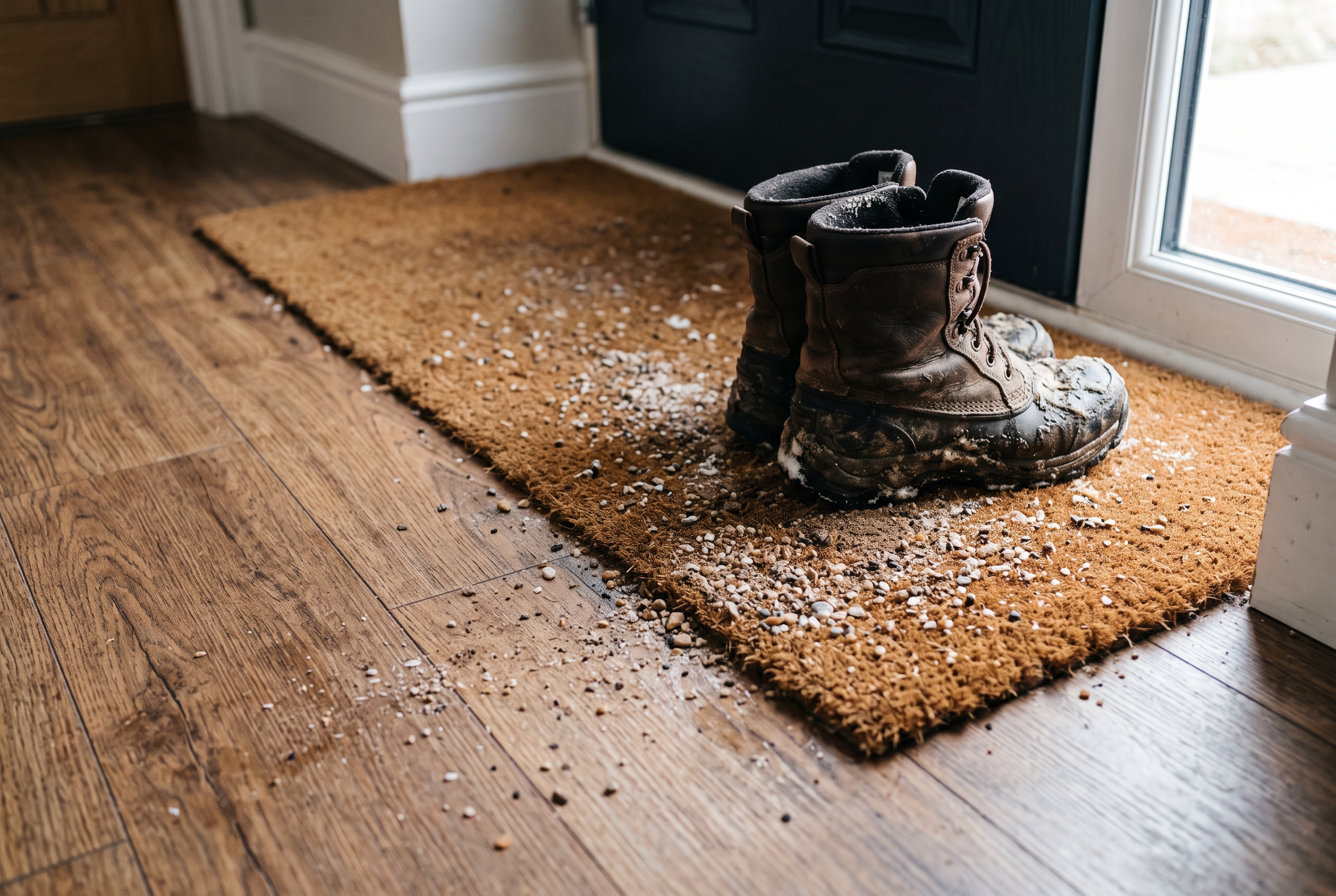
Bedrooms, guest rooms and a quiet living room are AC3 rooms. Kitchens, front halls and mudrooms are AC4 rooms, because they take the most shoes and the most sand. In Yonkers, sand and road salt come in all winter, and the front hall is where laminate wears first.
Stairs call for AC4 as well. Every step lands on the same front edge of each tread, and a matching stair nose finishes that edge.
With a big dog or young kids, go with AC4 and pair it with a matte or textured surface, which hides the small scratches no rating prevents. Our post on kid-friendly laminate for playrooms covers the rest of that choice.
A rental unit in a two-family house gets years more between tenants from AC4. A home office with a rolling chair needs AC4 plus a chair mat. A shop, office or other commercial space should look for AC5 or one of NALFA's commercial grades, and should check that the floor's warranty covers commercial use. Commercial installations are part of our services.
Every Mohawk laminate in our laminate catalog is rated AC4, and the catalog lets you filter by AC rating.
AC Rating, Thickness and the Other Numbers on the Box
The AC rating is one of several numbers on a laminate carton, and each measures something different, as this table shows.
| Number | What it tells you |
|---|---|
| AC rating (AC1 to AC6) | How long the surface resists wearing through |
| Thickness (8, 10, 12 mm) | Impact resistance, stability and sound |
| Use class (21 to 34) | Home or commercial, and how busy |
| NALFA level | Wear, scratch, impact and stain together |
Thickness and AC rating are separate. A thicker plank resists dents and feels and sounds more solid, but its surface doesn't wear any slower.
Two other numbers get mixed up with the AC rating. Luxury vinyl lists the thickness of its clear wear layer in mils, thousandths of an inch, rather than an abrasion class, and the two don't convert. Compare the floors by what each does best instead: laminate's hard surface for scratches, vinyl for water.
Our post comparing laminate and luxury vinyl covers how those floors differ. Glazed tile carries a PEI rating, from a different abrasion test for a different material.
Is AC5 or AC6 Worth It for a Home?
An AC5 or AC6 floor is rarely worth the extra in a home. It resists wear-through longer, but a home floor almost never gets that far. Laminate wear warranties generally define wear as the pattern worn through, and a floor usually starts to look tired from scratches and scuffs long before that.
Money beyond AC4 does more elsewhere. Put it into a textured or matte surface that hides scratches, a thicker plank that resists dents, water resistance in the kitchen, and a good underlayment for sound.
How to Make Laminate's Wear Layer Last
Grit is sandpaper under your shoes, so keeping it off the floor does more for laminate's wear layer than any rating. These habits make the biggest difference:
- Put mats inside and outside every entry, and shake them out often in salt season.
- Sweep, or vacuum on the hard-floor setting with the beater bar off.
- Put felt pads under chair and table legs, and replace them when they wear.
- Use a chair mat under rolling office chairs.
- Clean with a barely damp mop and a laminate cleaner.
Skip wax, polish and oil soap. They don't protect laminate's surface, and Mohawk tells owners never to use them on its floors.
Laminate AC Rating FAQ
Where Do I Find a Laminate's AC Rating?
The AC rating is printed on the carton label and the product's spec sheet. Our online catalog also lists it and lets you filter laminate by AC rating.
How Long Does AC4 Laminate Last?
Usually longer than you will keep it. In a home, AC4 laminate is typically replaced for looks, a remodel or water damage long before its surface wears through.
Can a Worn Laminate Floor Be Refinished?
No. A laminate floor's surface can't be sanded, so worn or damaged planks are replaced. That is one more reason to choose the right AC rating for busy rooms at the start.
Is AC Rating the Same as Scratch Resistance?
No. The AC rating measures slow wear from grit over years, while a scratch is a single sharp mark. A high-AC floor still needs felt pads and clean shoes.
Choosing Laminate With Us
Bring your room sizes, a note about pets and kids, and any photos to one of our showrooms, or request a free in-home estimate. We'll show you AC4 laminate in the room it's going into and help you choose the texture, thickness and water protection that matter for your house.

