

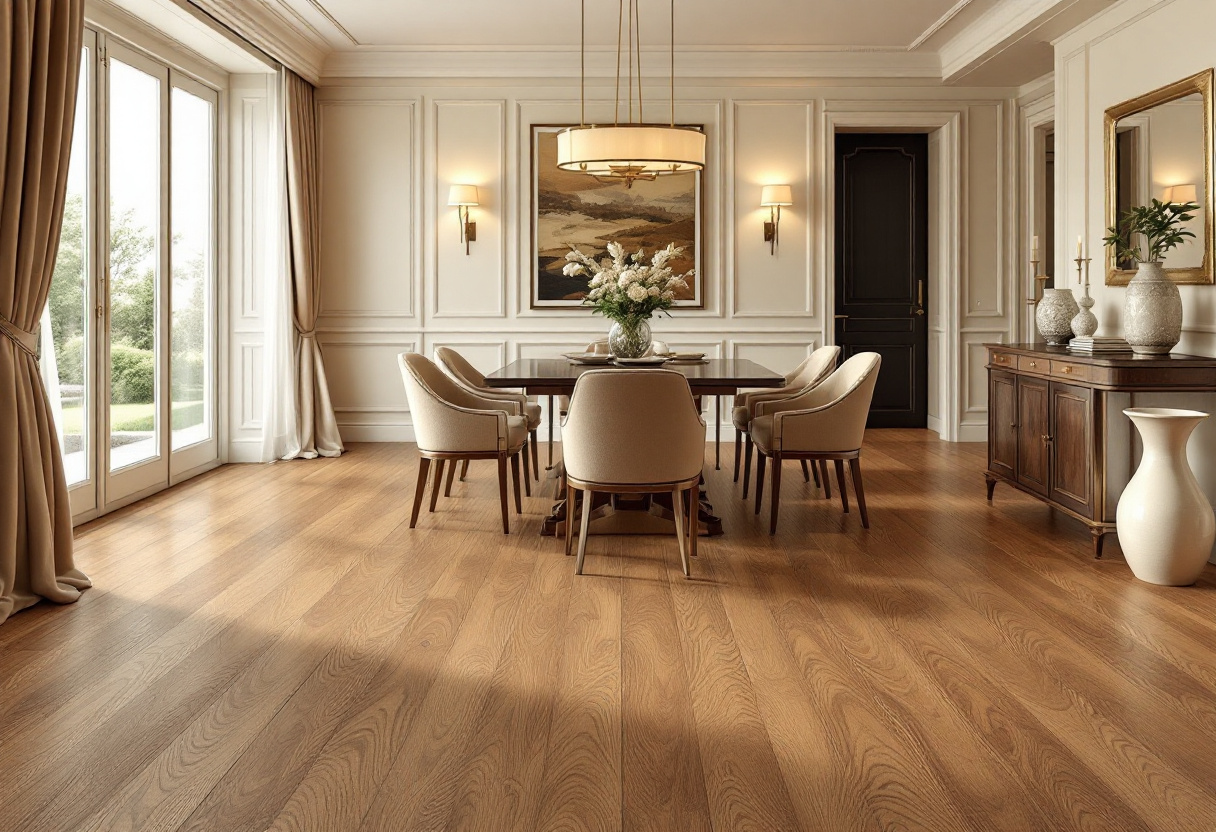
Not all oak-look laminate looks convincing. Some styles feel flat from across the room. Others are so repetitive that your eye catches the pattern immediately. The best laminate, especially in design-aware communities like Mount Kisco, succeeds because it gets the details right. It understands that realism is not a single feature. It is the result of several smaller decisions working together: color variation, texture, board scale, edge detail, and how the floor behaves under real room lighting.
Realism begins with variation
Real oak is never perfectly uniform. It has grain movement, tonal shifts, subtle mineral character, and the kind of irregularity that makes it feel alive. Laminate that tries too hard to look clean and consistent often ends up looking artificial. A more convincing floor will show controlled variation from plank to plank so the room does not feel stamped out.
That is one reason it helps to compare a broad laminate flooring collection rather than settling for the first oak visual that seems close enough. The more thoughtfully designed products usually create a more natural rhythm across the floor.
Texture matters more than many homeowners expect
A good oak-look laminate should not only resemble wood in color. It should suggest wood in texture too. Subtle embossing, low-gloss surface treatment, and grain patterns that align visually with the printed design all contribute to a more believable result. When the texture and the image feel disconnected, the illusion weakens.
This matters especially in Mount Kisco homes where natural light often reveals everything. In bright rooms, a laminate floor's surface quality becomes much easier to judge. If the finish is overly shiny or the texture feels generic, the room will tell on it quickly.
Board width and edge detail shape the whole impression
Plank size influences whether a laminate floor feels refined, casual, rustic, or overly manufactured. Wider boards can feel current and expansive, but they need the right visual balance. If the plank is wide and the pattern repeat is too obvious, the floor can look less convincing. Edge detail matters too. Micro-bevels or well-managed edges can help define each plank in a way that feels closer to real flooring. Too much bevel, however, can feel forced.
This is why seeing multiple styles side by side is so valuable. What feels "more premium" is often not louder. It is simply better resolved.
Color temperature should work with the home, not chase a trend
Oak-look laminate comes in all kinds of color families now, from pale Scandinavian-inspired tones to richer naturals and deeper browns. The right choice depends on your home. A cool gray-beige might seem fashionable, but if your trim, cabinetry, or furnishings lean warm, the room can feel unsettled. Likewise, a very warm oak tone may feel out of place if the rest of the space is crisp and contemporary.
This is where shop-at-home service can be extremely helpful. Seeing laminate samples beside your walls, fabrics, and daylight often makes the right temperature obvious in minutes.
Real-looking laminate is also about restraint
The most believable oak-look floors rarely scream for attention. They read as wood first and product category second. That usually means avoiding exaggerated distressing, excessive shine, or a color that feels more like a social-media trend than a natural material. The goal is not to trick everyone into thinking it is hardwood from an inch away. It is to create a floor that looks good, feels appropriate, and holds up beautifully in real life.
Allen Carpet's our work can help homeowners see how wood-look floors behave in finished rooms instead of guessing from isolated samples.
If you want laminate that feels elevated rather than merely economical, focus on the details that create realism. Explore Allen Carpet's laminate options, schedule a shop-at-home visit, and request a free estimate so your Mount Kisco floor looks intentional, polished, and true to the home around it.

