

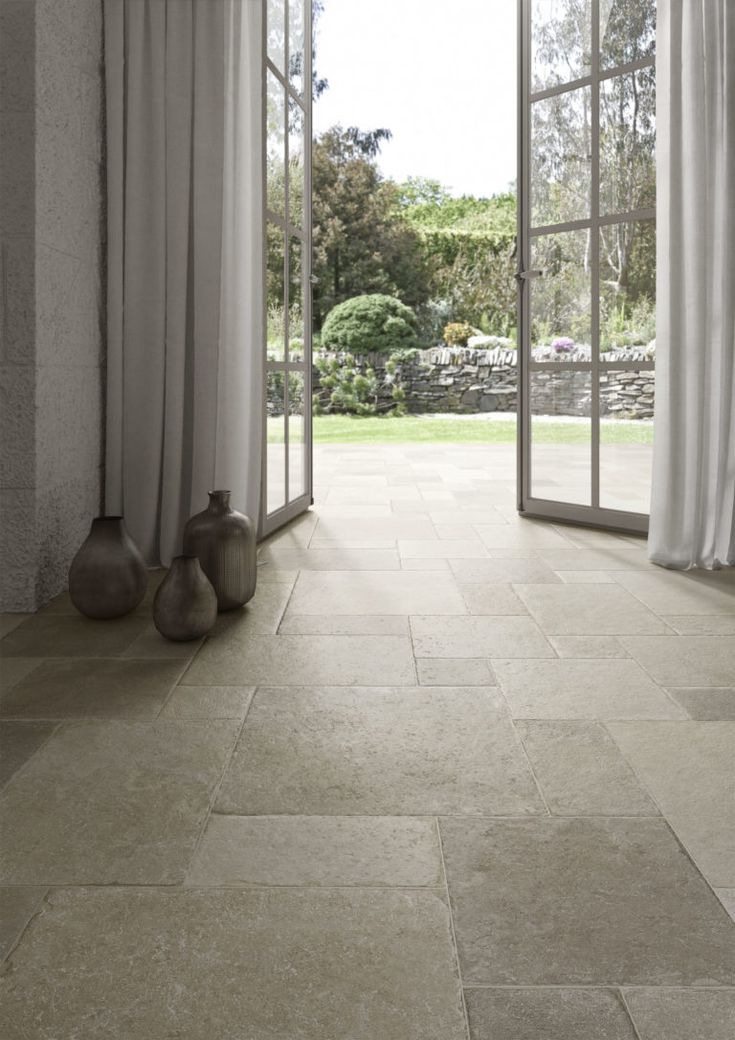
Natural stone and stone-look porcelain both put a marble or travertine look on your floor, so the honest tie-breaker is upkeep versus authenticity. Porcelain is a manufactured tile made to be nearly waterproof and to need no sealing, which makes it the low-maintenance pick for wet rooms and busy entries. Natural stone is the real thing, with depth and variation no print can copy, and it asks for sealing and acid-safe cleaning in return. We sell and install both, so we have no reason to talk you into one over the other. Here's how they line up on water, durability, slip, cost, and looks, and a simple rule for deciding.
The Real Difference: Porcelain Is Made Impervious, Stone Is Quarried
Porcelain and natural stone start out completely differently, and it shows in the water numbers. Porcelain is clay fired so dense that it barely absorbs water: under the ceramic tile standard published by the Tile Council of North America (TCNA), the trade group that writes the U.S. tile standards, a tile only counts as porcelain if it absorbs 0.5% or less of its weight in water, which puts it in the impervious class. The same standard grades other tile as vitreous at more than 0.5% up to 3%, semi-vitreous from 3% to 7%, and non-vitreous above 7%. Natural stone has no single number, because it's quarried and its porosity depends on the stone. Marble, travertine, and limestone are calcium carbonate, so they soak up liquids and etch from acids unless they're sealed and cleaned with care. Vinegar sits around pH 2.4 to 3.4 and lemon near pH 2, plenty acidic to dull marble, while the same splash does nothing to a glazed porcelain. That one difference, porosity, drives almost everything else.
How Natural Stone and Porcelain Compare, Point by Point
Natural stone and porcelain split along a handful of properties you can check on a spec sheet: how much water they absorb, whether they need sealing, how they handle scratches and wet-floor slip, and how they behave outdoors. The table lines them up.
| Factor | Natural stone | Stone-look porcelain |
|---|---|---|
| Water absorption | Porous; calcareous stone absorbs and etches | Impervious, 0.5% or less (ANSI A137.1) |
| Sealing | Periodic impregnator; check with a water test | None on the glazed face; seal grout only |
| Scratch hardness | Marble calcite about 3 on the Mohs scale | Hard fired surface; wear rated by PEI class |
| Abrasion rating | No standard tile class | PEI 1 to 5 (ASTM C1027 abrasion test) |
| Wet-floor slip | Honed or textured grips; polished is slick | Pick a wet DCOF of 0.42 or higher |
| Freeze-thaw outdoors | Dense stone yes; soft porous stone spalls | Impervious porcelain resists freeze-thaw |
| Look | Every piece unique; veining runs through | Printed pattern; repeats across tiles |
Where Natural Stone Still Wins
Natural stone wins on authenticity, and that's real, measurable value. Every marble, slate, or travertine tile is a unique piece of the earth, with veining and color shifts that a printed porcelain simply repeats tile to tile. Stone also has real depth, because light plays into honed marble in a way a glaze only sits on top of. And since it's solid material all the way through, a scratched or etched stone floor can be re-honed and brought back by a restoration specialist, while a chip in glazed porcelain shows the different-colored body underneath. The trade-off is upkeep. Marble's calcite sits at only about 3 on the Mohs scale, which runs from talc at 1 to diamond at 10, so it's just above a fingernail at 2 to 2.5 and well below a steel knife at 5 to 6.5 and the quartz grit at 7 that rides in on shoes. That softness is why real stone needs mats, sealing, and acid-free cleaning to hold its finish. If the genuine material is what you want, the marble, slate, and travertine in the natural stone we carry is worth seeing in person, where the variation is the whole point.
Where Stone-Look Porcelain Wins
Stone-look porcelain wins anywhere water, salt, or hard use is the daily reality. Because it's impervious at 0.5% or less, it doesn't need sealing, doesn't etch when someone sets a lemon on it, and wipes clean with an ordinary neutral cleaner. That makes it the easy answer for bathrooms, mudrooms, laundry rooms, and basements. Outdoors it holds up too: impervious, frost-resistant porcelain shrugs off the freeze-thaw cycles that crack porous tile, which matters for a Westchester entry or patio that ices over every winter. Durability comes printed on the box as a PEI abrasion class from 1 to 5, so you can match the tile to the traffic; PEI 3 covers most home floors, with 4 and 5 for the hardest-working rooms. Slip resistance is rated the same way tile is, as a wet DCOF, where 0.42 or higher is the target for a floor that gets wet. You give up the one-of-a-kind character of real stone, and for a hardworking floor many families call that a fair trade. You'll find those looks in our tile selection, which includes marble- and travertine-look porcelain.
What Stone and Porcelain Cost You Over Time
Cost is where an honest comparison has to count the years after installation, well beyond the receipt. Up front, natural stone usually runs higher than a comparable porcelain, because it's a quarried material, it's often heavier and thicker to handle and set, and the labor is more exacting. Porcelain's price swings widely with size, thickness, and how good the print is. The gap doesn't close at checkout, though. Stone keeps costing a little in upkeep: sealer now and then, careful cleaners, and the occasional professional re-hone if it dulls. Porcelain mostly asks for a neutral cleaner and clean grout. Neither one is cheap when it's done right, and installation quality drives the lifetime cost of both, since a floor set on a poorly prepped subfloor fails no matter what it's made of. We price both materials the same honest way, measured and set by our own installation crews.
Questions We Get About Stone vs. Porcelain
Can porcelain really look like marble or travertine?
Porcelain can look convincingly like marble or travertine from standing height, thanks to high-resolution printing on the tile face. Up close, the tell is repetition: the same veins show up on more than one tile, and on a glazed tile the pattern lives only on the surface, so a deep chip reveals a plain body underneath. Real stone runs its veining all the way through. For most rooms the printed look is more than convincing enough; for a showpiece floor, some people still want the genuine article.
Does stone-look porcelain need sealing?
Stone-look porcelain doesn't need sealing on its glazed surface, and that's one of its biggest advantages over real stone. The grout between the tiles is a different story: cement grout is porous and does benefit from a grout sealer. Natural stone, by contrast, needs an impregnating sealer on the stone itself, refreshed when a water test shows it soaking in. So with porcelain you seal the grout lines; with stone you seal the stone and the grout.
Which is better for a bathroom floor?
Porcelain is usually the better bathroom floor, because a bathroom is wet and most people want low upkeep, and porcelain handles both. Pick a tile with a wet DCOF of 0.42 or higher and enough texture to grip bare wet feet. If your heart is set on marble, it can absolutely work; just choose a honed finish for grip, keep it sealed, and clean it with pH-neutral products so soap and shampoo don't etch it. Both can be beautiful. The real question is how much upkeep you want to sign up for.
Is natural stone worth the extra upkeep?
Natural stone is worth the extra upkeep when you value the real material and you'll do a little maintenance to keep it. If you want a floor you can mop and forget, stone-look porcelain gets you the look with almost none of the care. If you want the genuine depth, variation, and feel of marble, slate, or travertine, and you'll seal it and clean it right, stone rewards you for decades. It comes down to how you actually live in the room.
Choosing Between Stone and Porcelain in Your Home
Choosing between stone and porcelain comes down to a simple rule: pick stone-look porcelain when the room is wet or hardworking and you want low upkeep, and pick natural stone when authenticity and character are worth a sealing schedule and careful cleaning. In a Westchester home, that often means porcelain in the mudroom, bath, and basement where salt, slush, and moisture rule, and natural stone in a formal foyer or a fireplace-front room where you want the real material. Because we sell and install both, we can lay a sample of each in your actual light and talk through the trade-offs without steering you toward the pricier option. When you're ready to compare them side by side, request a free in-home estimate and we'll measure, price both, and help you choose the floor that fits the room and the way you live.

