

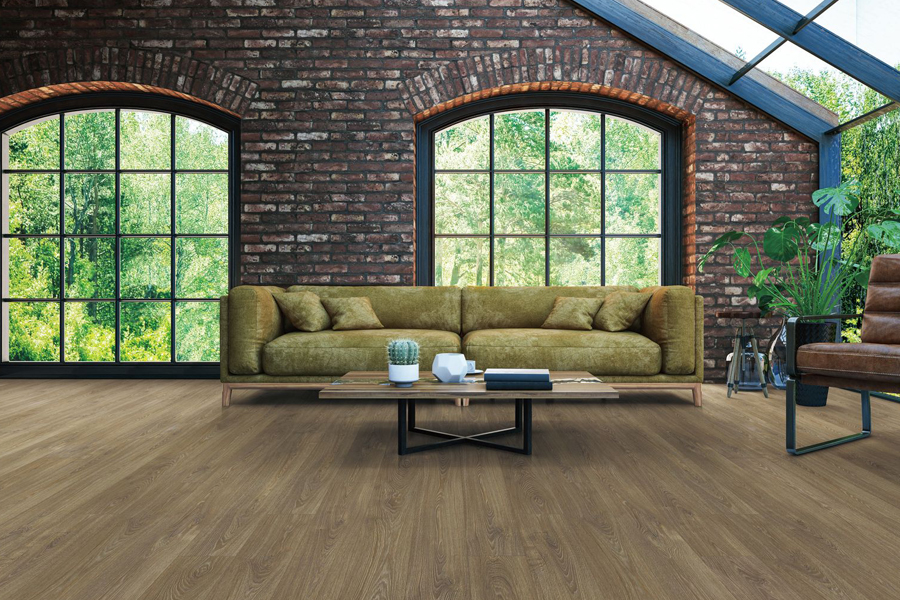
Westchester families know the rhythm well: Monday through Thursday, the second home sits quiet. Friday evening, the cars pull in, the doors swing open, and suddenly every square foot of flooring gets tested. Bare feet, sandy paws, luggage wheels, and dining chair scrapes all arrive at once. That pattern — long stretches of stillness followed by concentrated bursts of activity — demands a floor that handles the extremes without demanding constant attention in return.
Laminate has quietly become the material best suited to exactly this rhythm. The reasons go deeper than the obvious price difference.
Why Scratch Resistance Matters More in a Weekend Home
A primary residence gives flooring a steady, predictable workload. You notice a scratch on Tuesday and address it. You sweep the entryway daily because you live there. A second home operates differently — it gets pummeled for 48 hours, then sits empty for five days. Nobody is around to wipe up the spilled drink on Sunday night or catch the new scuff near the back door before it sets.
That's where modern laminate's wear layer changes the equation. Most quality laminates carry an AC3 or AC4 rating, purpose-built for heavy residential traffic, and the top surface resists the scratches that come from dragged suitcases, excited dogs, and dining chairs pushed back a dozen times in a weekend. When you dig into what to know before buying laminate flooring, scratch resistance ratings are among the first specifications worth comparing across collections.
The real peace of mind comes from knowing that when you lock up on Sunday and head back down the Taconic, the floors won't punish you for the fun that just happened.
The Technology Keeping Modern Laminate Tough
Today's laminate bears almost no resemblance to the product of twenty years ago. The surface layer is a melamine-infused sheet fused under high pressure, printed with photographic precision to capture every grain line and knot. Beneath that sits a high-density fiberboard core, and beneath that, a stabilizing backing that resists moisture from below.
Waterproof laminate takes the protection further still. Collections like Mohawk's RevWood Plus use a proprietary coating and locking system that prevents liquid from seeping between planks — a meaningful advantage in a second home where a window left cracked during a summer storm could spell trouble for traditional wood. The core stays dimensionally stable through humidity swings that cause solid hardwood to cup or crown.
For homeowners looking at the top end of performance, Mohawk laminate collections pair the waterproofing technology with textured surfaces that reproduce the grain feel of real oak or hickory. You get the look without the maintenance anxiety that comes with natural wood.
Laminate vs. Hardwood in an Intermittently Occupied Home
Hardwood has its place — those original wide-plank floors in a restored colonial are irreplaceable. But for a weekend property, laminate offers practical advantages beyond the price tag.
An unoccupied home experiences wider temperature and humidity ranges than a lived-in one. In winter, the thermostat might stay at 55 degrees. In August, the air conditioning could be off entirely. Solid hardwood expands and contracts with those swings, and repeated cycles create gaps or buckling over time. Laminate's engineered core stays far more stable through those conditions.
Then there's the durability question during the occupied weekends. A lake house near Mohegan Lake — where kids track in sand and guests rearrange furniture to create extra sleeping space — puts hardwood through a gauntlet that laminate handles with ease.
Choosing a Look That Suits the Retreat
The visual range of laminate today is remarkable. Wood-look laminate spans everything from pale white oak to deep walnut tones, with surface textures that include wire-brushed grain, hand-scraped character, and smooth contemporary finishes.
For a weekend home in the Hudson Valley, wider planks in lighter tones tend to work well. They hide the occasional scuff, brighten rooms that may have fewer windows than a primary residence, and create a relaxed atmosphere that suits a retreat. Darker stains and narrower planks can read more formal — better suited to a dining room than a great room where wet swimsuits are standard attire.
The key is matching the floor to how you actually use the space, not how you picture it in a catalog. If your second home hosts holiday dinners for twelve and summers full of grandchildren, lean toward lighter tones and the highest AC rating you can find.
If you are furnishing a weekend home or updating a property before the next season begins, visit Allen Carpet & Home to walk through laminate samples in person. Our team can help you compare textures, core types, and wear ratings across Mohawk and Shaw collections at our Mohegan Lake showroom on East Main Street or either of our other Westchester locations. Schedule your free estimate online, or stop by to get started.

