

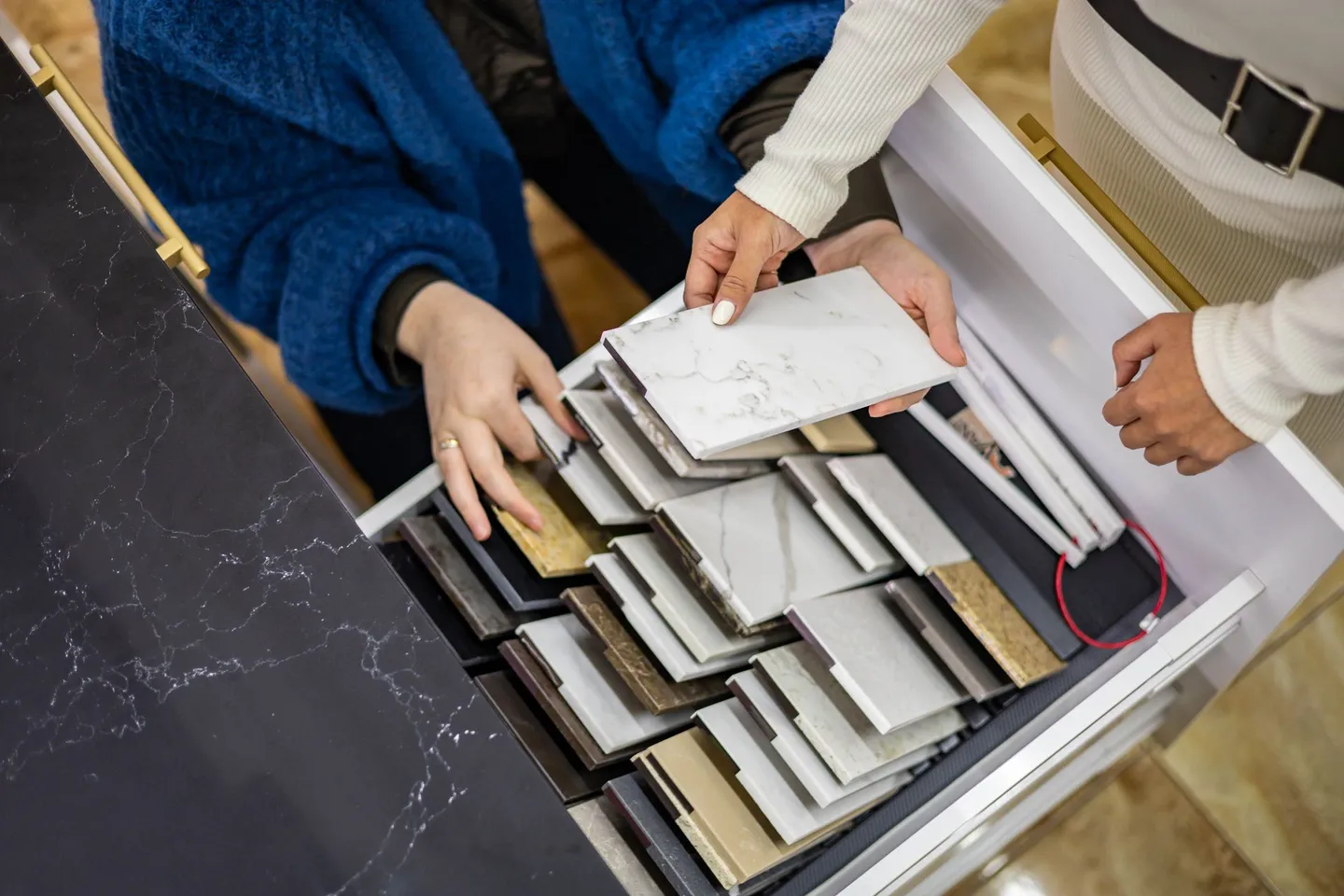
The one spec that tells you whether a tile is safe underfoot when wet is its DCOF, and the number to look for is 0.42 or higher. DCOF stands for dynamic coefficient of friction, and a tile that meets 0.42 wet under the ANSI A326.3 test is the floor you want in a bathroom, a shower, an entry, or anywhere water lands. Color and price get all the attention in the showroom. Grip is what keeps someone on their feet. Below is what the number means, why finish moves it, and what to look for room by room.
What Does DCOF Mean on a Tile Spec Sheet?
DCOF, or dynamic coefficient of friction, measures how much grip a tile keeps while your foot is already sliding across it, on a scale where a higher reading means more traction. The test is run under a method called ANSI A326.3, written by the Tile Council of North America (TCNA), the trade body that publishes the U.S. ceramic-tile standards. A machine called a BOT-3000 drags a weighted sensor about 10 inches across the tile, and the surface is wetted with a thin soap solution, sodium lauryl sulfate at 0.05%, so the reading reflects a real wet floor instead of a dry lab. The result is a single decimal you can compare from one tile to the next. That decimal, measured wet, is the whole ballgame for a floor that gets water on it.
Why 0.42 Is the Wet-Area Number to Look For
A wet DCOF of 0.42 is the minimum the tile industry sets for a level interior floor that's expected to be walked on when wet, so treat it as the pass mark for a bathroom, a laundry, or a kitchen near the sink. ANSI A326.3 sorts tile into five use categories, and the two that matter most at home are Interior Dry, which needs a dry DCOF of 0.42 or more, and Interior Wet, which needs 0.42 wet. Anything below that wet number belongs on a wall or in a room that stays dry. One caution matters here. TCNA is blunt that 0.42 is only a minimum: because many things affect whether a person slips, the rating by itself can't promise a surface is safe. Footwear, standing water, soap, and how often the floor gets cleaned all move the odds.
The Old 0.6 Static Rule Was Withdrawn in 2014
The static-friction rule that older spec sheets still quote, a static coefficient of friction of 0.6, came out of accessibility guidance and an ASTM test that no longer exists. The U.S. Access Board once recommended a static coefficient of 0.6 for floors and 0.8 for ramps, and those numbers spread into tile specs for years. The test behind them, ASTM C1028, was withdrawn in 2014 because it measured friction from a standstill and gave shaky readings on wet floors. Walking isn't a standstill. The DCOF method replaced it precisely because it measures grip while the foot is moving, which is when people actually slip. So if a salesperson or an old spec quotes 0.6 static, that's a sign the information is dated. The number to ask for now is the wet DCOF, and the mark is 0.42.
How Finish and Texture Change a Tile's Grip
Finish changes a tile's grip more than its color or even its material does. A polished porcelain or marble tile can look almost identical to a matte one and read far lower on the DCOF test, because a glassy, ground surface has little to bite back when it's wet. Porcelain is dense by definition, absorbing 0.5% or less of its weight in water, and that same tightness is what lets a polished face turn slick. Texture is the fix. A matte, honed, structured, or grit-finished surface raises the number, and a mosaic of small tiles adds grout lines that break up standing water and give feet an edge to catch. There's a real trade-off, though: the rougher the surface, the more dirt it holds and the more scrubbing it takes. When you're weighing options from the tile we stock, or from natural stone that you plan to have honed rather than polished, ask for the wet DCOF on the exact finish you like, since two versions of the same tile can score very differently.
What to Look For in Each Wet Area
Each wet area calls for its own mix of DCOF and finish, so match the tile to what the room actually does. Use the table as a starting point, then confirm the rating on the specific tile you like.
Area | What to look for | Why it matters |
|---|---|---|
Bathroom floor | Wet DCOF 0.42 or higher; matte or honed | Bare feet, water, soap |
Shower floor | Small-format or mosaic; textured; barefoot B or C | Constant water; slope to drain |
Curbless or wet room | Shower-floor rules across the whole floor | Water travels past the pan |
Kitchen at sink and stove | Wet DCOF 0.42 or higher; grease-rated if commercial | Spills, grease, standing |
Entry and mudroom | Exterior-rated, freeze-thaw (ASTM C1026); textured | Salt, slush, grit tracked in |
Aging-in-place bath | Higher texture; grab-bar backing planned | Fall risk climbs with age |
Pool deck or patio | Manufacturer-declared exterior wet; R11 or higher | Sloped, soaked, outdoors |
The R and A/B/C Ratings on Imported Tile
R ratings and A/B/C ratings on imported tile come from two German ramp tests rather than the U.S. DCOF method, and you'll see them on a lot of European porcelain. The R scale (from the standard DIN 51130) has a tester in shoes walk an oiled ramp that tilts until they slip: R9 grips only to about 10 degrees, R10 to 19, R11 to 27, R12 to 35, and R13 beyond, so a higher R means a steeper slope held. The A/B/C scale (DIN 51097) does the same barefoot on a wet ramp, with A holding to about 18 degrees and C past 24, which is why pool decks and communal showers get specified B or C. One thing to know: these ramp classes don't convert to a DCOF number, so a tile marked R10 hasn't been proven to meet 0.42. Ask for the DCOF too, especially for a floor inside the house.
Where Slip Resistance Matters Most: Bathrooms and Aging in Place
Bathrooms are where slip resistance earns its keep, and the injury numbers make the case. In 2008, U.S. emergency rooms treated an estimated 234,094 nonfatal bathroom injuries, a rate of 96.4 per 100,000 people, and falls caused 81.1% of them. The single worst spot, at 65.8 per 100,000 people, was in and around the tub or shower. Risk also isn't spread evenly: women were hurt at 121.2 per 100,000, 72% higher than the 70.4 rate for men, and the rate climbs steeply with age. That's the whole argument for planning ahead. A barefoot adult on a wet, hard floor is the exact situation the 0.42 standard is built for, so a bathroom remodel is the moment to specify it and to add grab-bar backing while the walls are open. Around here, the other high-risk floor is the entry. A Westchester entry takes road salt and slush all winter, and freeze-thaw swings crack the wrong tile, so an entry wants an exterior-rated, freeze-thaw tile with real texture. If you're weighing the options, our guide to choosing tile and stone for a kitchen or bath walks through the wet-room choices.
Questions We Get About Slip-Resistant Tile
Is polished porcelain a bad idea in a bathroom?
Polished porcelain can be a real slip risk on a wet bathroom floor, even though it's beautiful. A ground, glossy face has little texture, and porcelain's density (0.5% water absorption or less) means water sits on top instead of soaking in. Use polished porcelain on walls or in dry areas, and pick a matte, honed, or textured finish that meets 0.42 wet for the floor itself.
Does a rougher tile feel bad underfoot?
A rougher tile does trade some comfort and easy cleaning for grip, and that's usually the right call in a wet room. Heavier texture can feel abrasive to bare feet and holds more dirt in its surface, so it takes more scrubbing. For a shower floor that's a fair price for traction; for a big kitchen floor you may want a lighter texture that still clears 0.42.
Can you make an existing tile floor less slippery?
You can make an existing tile floor grippier without tearing it out, within limits. Anti-slip treatments micro-etch the surface to raise its wet grip, good mats help at the tub and sink, and keeping the floor free of soap film matters more than people think. None of that turns a polished floor into a textured one, so for a floor that's already a hazard, replacing it with a tile rated 0.42 wet is the honest fix.
What DCOF should a shower floor have?
A shower floor should pair a wet DCOF of 0.42 or higher with a small-format or mosaic tile, because the extra grout lines add traction and let the floor slope to the drain. Barefoot ramp classes B or C, from the wet A/B/C scale, are a useful second signal on imported tile. Bigger tiles can work on shower walls, where slip isn't the issue.
Choosing Tile That's Safe Underfoot in Your Home
Choosing tile that's safe underfoot comes down to matching the wet DCOF and the finish to what each room does, and 0.42 wet is the mark to clear for any floor that gets water. Bring the room into the conversation: bare feet or shoes, how much water, how it drains, and who uses it. Allen Carpet & Home has sold and installed tile across Westchester County for four generations, and our design team can pull the DCOF on the exact tiles you're weighing and steer you toward finishes that stay safe when they're wet. When you're ready to price it out, request a free in-home estimate and we'll measure the space and talk through the options that fit your home. Grip is worth getting right.

