
On a dark winter morning, a Mohegan Lake family hears the familiar thump of kids racing down the stairs for school. Wet boots, a sleepy teenager, and smooth hardwood treads are not an ideal combination. Many Westchester parents know that uneasy feeling as they call out “Slow down!” and hope no one slips. A well-chosen stair runner turns that daily worry into a staircase that feels secure underfoot and looks intentionally designed, not improvised.
Why Stair Runners Matter in Westchester Homes
Westchester’s housing stock includes steep staircases in pre-war colonials and longer runs in mid-century splits. Add in snowy winters, road salt, and wet shoes, and bare hardwood steps become slick and scuffed. A quality runner adds traction, sound absorption, and protection for the hardwood underneath.
To understand how fibers, pile height, and backing affect performance, many homeowners start with an area rug guide and then apply the same principles to stairs. Runners are essentially long, narrow area rugs designed to take the brunt of daily traffic while preserving the character of your wood steps.
Safety First: Construction Details That Prevent Slips
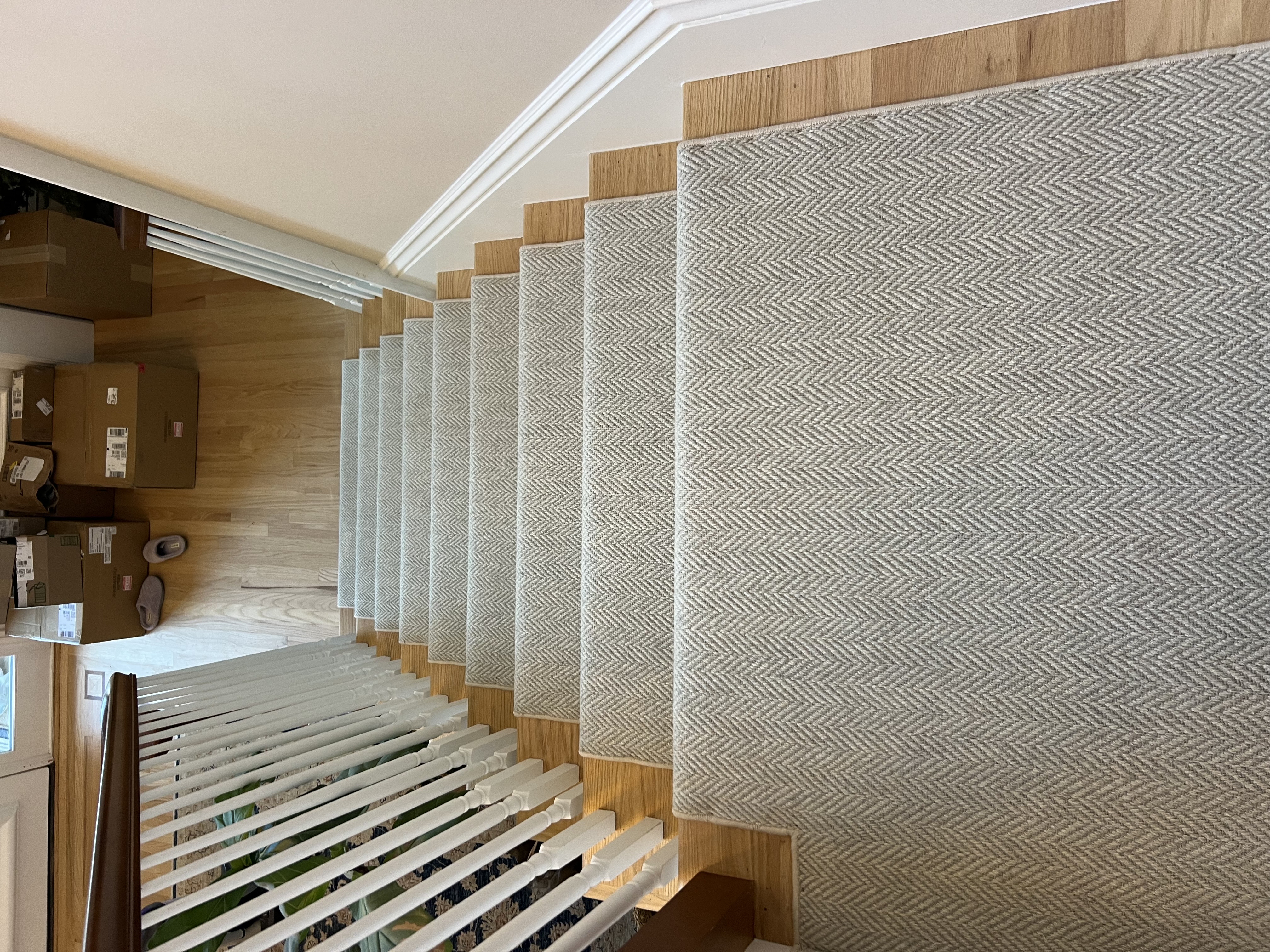
The safest stair runners combine the right material, padding, and installation. Wool and wool-blend wool area rugs grip the foot better than shiny synthetics and recover quickly from traffic. Dense, low to medium pile reduces the chance of catching a toe or a heel on the edge.
Professional stair runner installation is especially important on enclosed or winding staircases common in older Yonkers homes. Properly sized pads, secure fastening at each tread and riser, and carefully finished edges keep the runner from shifting or rippling over time. That attention to detail protects both your family and the underlying engineered hardwood, which already works hard to handle Westchester’s humidity swings.
Style That Respects Your Architecture
Safety does not mean sacrificing character. In many Mount Kisco-area homes, the staircase is visible from the foyer and living room, so the runner needs to complement existing rugs and wood tones. Classic traditional area rugs echo the millwork of Tudors and colonials, while subtle modern patterns can calm a busy open-plan space.
Coordinating the staircase with your main-level floors and rugs is easier with interior design services that look at the house as a whole. A designer will consider contrast against dark or light treads, how the pattern will read on narrow steps, and how the runner will connect visually with any area rugs in adjacent rooms. The result feels intentional: the runner becomes a design thread tying together hardwood floors, furniture, and architecture.
Living With Your Runner: Durability and Care
Stairs see more concentrated wear than any other surface in the house. Choosing durable fibers and understanding cleaning needs up front saves frustration later. A concise area rug care guide explains how regular vacuuming, prompt spot treatment, and periodic deep cleaning keep fibers looking fresh without damaging them.
Because Westchester winters bring salt and grit, encourage family members to remove shoes before heading upstairs, and place coordinating hallway runners near entries to catch debris. Protecting the runner also protects the hardwood edges that frame it, preserving the investment you’ve made in both surfaces.
Ready to Rethink Your Stairs?
A thoughtful stair runner transforms the most traveled path in your home into a safe, beautiful connector between floors. The team at Allen Carpet & Home helps Westchester families balance traction, durability, and style every day. Visit our Mohegan Lake, NY or Yonkers, NY showroom—or explore options with our Mount Kisco staff—then schedule your free estimate to plan a stair runner that fits your home and how your family really lives.

