

A homeowner in Mohegan Lake stands in their empty living room, sample boards spread across the subfloor. They've settled on white oak. But the sample on the left — a generous seven-inch plank — looks nothing like the two-and-a-quarter-inch strip beside it. Same species, same finish, completely different presence. That difference in scale changes the entire feel of a room, and it's one of the most consequential choices you'll make before the first board goes down.
What Plank Width Does to a Space
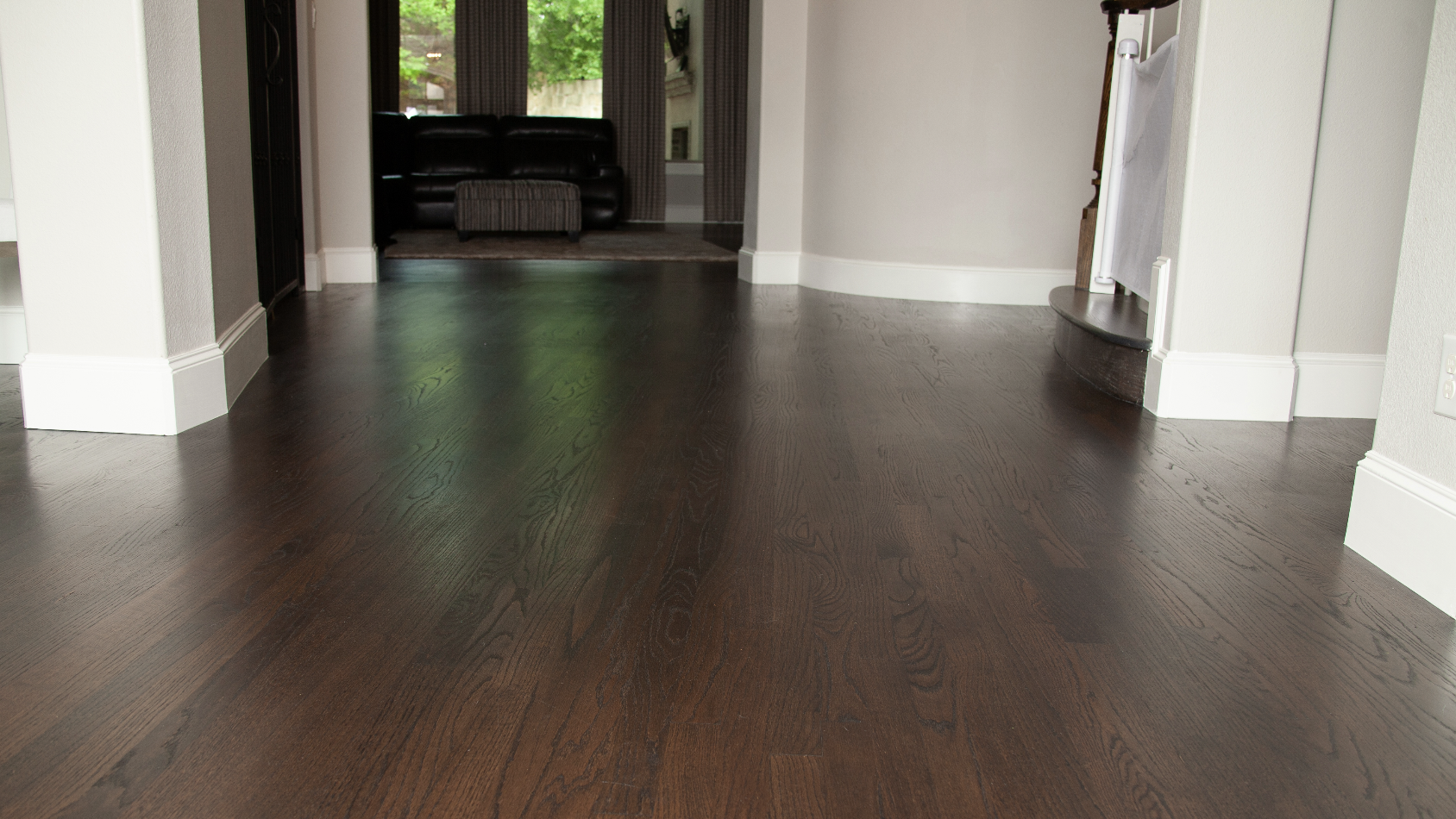
Plank width shapes how your eye moves through a room before you ever register it consciously. Wide planks — generally anything five inches and up — create fewer seam lines across the floor. The visual result is cleaner, calmer, and often more modern. Narrow strips, the classic two-and-a-quarter-inch standard, introduce more rhythm. Each board becomes a small repeated element rather than a sweeping gesture.
In larger rooms, wide-plank hardwood plays to the scale of the space. A great room or open-concept main floor with seven-inch oak planks feels proportioned rather than busy. But the same floor in a compact bedroom or narrow hallway can overwhelm — the planks fight the dimensions of the room rather than complementing them. Narrow planks, by contrast, bring texture and detail that reward attention in cozier spaces without making them feel smaller.
The takeaway: room size should guide your first instinct, but it's not the only variable.
The Home's Age and Architecture Matter
What you're working with depends heavily on when your house was built. Westchester County spans centuries of architecture, and that history shapes the flooring conversation in every project.
Pre-war colonials and Tudors — the kind found throughout older village neighborhoods — often came with narrow red or white oak strips, typically two-and-a-quarter inches. Replacing like with like preserves the historic rhythm of the home. But plenty of owners in these houses choose to go wider, trading period authenticity for a more open, contemporary feel.
Homes built in the last thirty years, particularly the larger footprints common in northern parts of the county, have far more flexibility. Nine-foot ceilings and expansive floor plans can carry eight-inch planks without any visual tension. The hardwood styles guide walks through how width interacts with species, texture, and finish — it's worth spending time with before committing to a direction.
The takeaway: the age and bones of your house matter as much as personal taste.
Climate, Construction, and Common Sense
Plank width isn't just an aesthetic call. It's a material decision with real-world consequences, especially given the Hudson Valley's humidity swings.
Solid hardwood expands and contracts across its width with seasonal moisture changes. A wide solid plank moves more than a narrow one — more wood, more movement. When dry winter heating follows wet summer humidity for months at a time, that movement can mean gapping in January and cupping in August if the material isn't right for the conditions.
This is where engineered hardwood earns its place in the conversation. Its cross-ply construction resists the dimensional change that challenges solid wood, making it a practical choice for wider planks across large areas or below-grade spaces. You get the same surface appearance — the same white oak, the same finish — with far more dimensional stability.
The takeaway: wide planks in solid hardwood demand careful acclimation and climate control. Engineered construction removes much of that risk.
Deciding With Confidence
There's no universal right answer, but there's a clear path to the right one for your home. Start with room proportions. Then consider the age and character of the house. Layer in the practical realities of construction type, humidity management, and installation conditions. The hardwood buying guide covers these variables in detail, from species selection to finish considerations — it's designed to help you walk into a showroom already knowing which questions matter.
For many homeowners in the area, the sweet spot lands between three and five inches: wider than the traditional standard, with enough presence to feel current, but not so aggressive that it fights the architecture or demands extraordinary climate accommodations.
Visit Allen Carpet & Home at any of our three showrooms to see the difference in person. A sample board under showroom lights tells you something, but holding it against your own baseboards and walls tells you everything. Schedule a free estimate for an in-home consultation, and we'll help you sort out which width, species, and construction make the most sense under your feet.

