

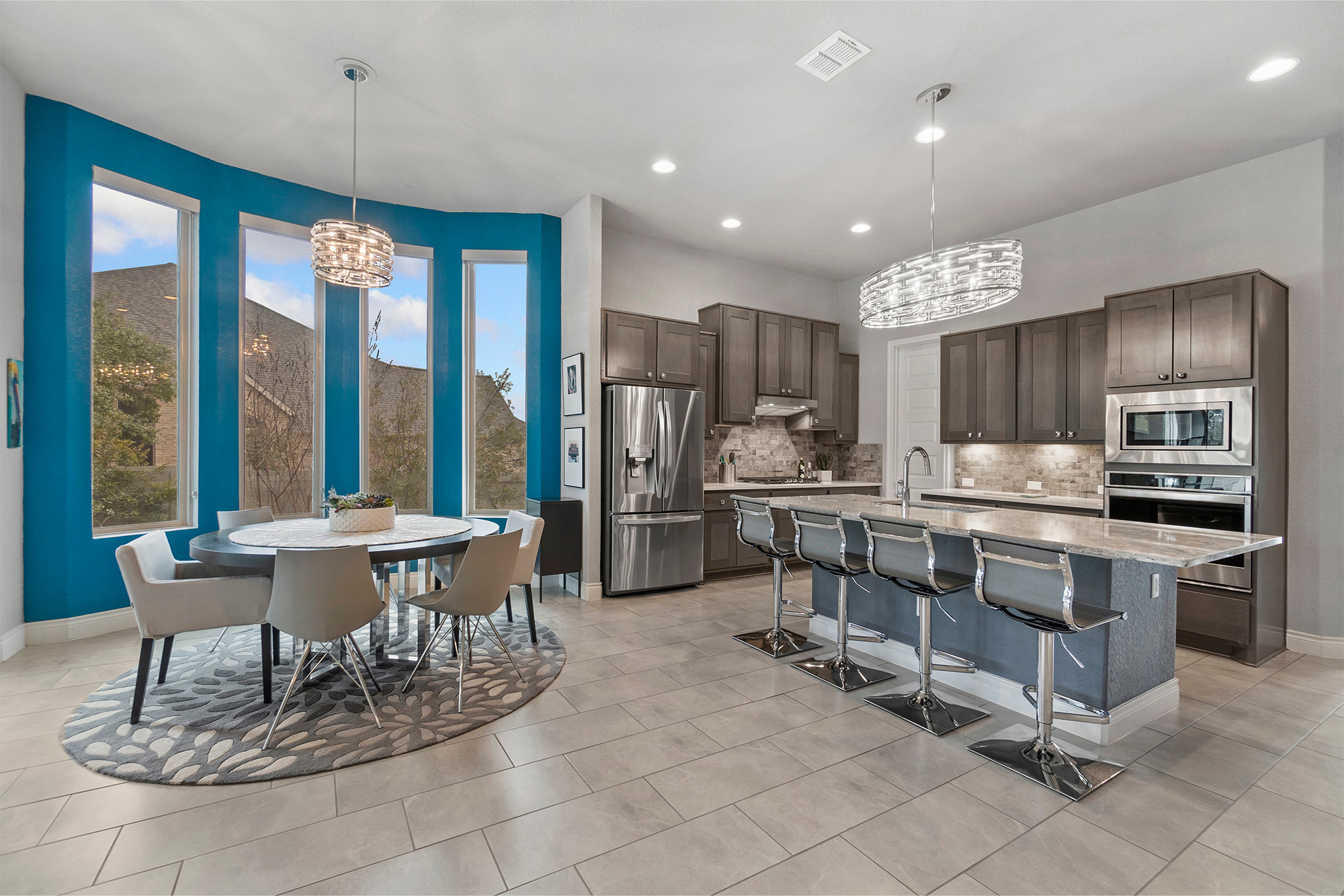
The best tile for a kitchen floor is a porcelain rated PEI 3 or higher for wear, with a wet DCOF of 0.42 or better where the floor gets wet, set in a grout that shrugs off grease. Porcelain earns the spot in most working kitchens because it's dense, hard, and easy to keep clean; natural stone can be stunning and asks for more care. A kitchen floor takes grit, dropped pans, spills, and standing water that a bedroom never sees, so it pays to choose by the ratings. Each number below maps to how you actually cook.
What Makes a Kitchen Floor Different
Kitchen floors take punishment other rooms never dish out, and that changes which tile ratings matter. Grit tracked in from outside grinds against the glaze like sandpaper. Pans and glasses drop. Water pools at the sink, and grease films the floor by the stove. Four numbers answer those threats: the PEI wear class, the water-absorption group, the wet DCOF for slip, and the grout you pick. Get them right and the floor still looks good in ten years; get them wrong and you're regrouting, or worse, replacing, far too soon. The good news is that all four are printed on the spec or easy to ask for, so a kitchen floor can be chosen on evidence instead of guesswork.
PEI: The Wear Rating That Decides Kitchen Tile
PEI, short for the Porcelain Enamel Institute scale, is the wear rating that tells you how much traffic a glazed tile's surface can take before it dulls, running from Class 0 up to Class 5. The test spins a pad of abrasive across the glaze and counts how long the finish holds. Class 0 is walls only. Class 1 and 2 suit light-traffic rooms like bedrooms. Class 3 covers all the rooms in a house, kitchens included, and Class 4 steps up to entrances, busy kitchens, and light commercial work. For a working kitchen, treat Class 3 as the minimum and Class 4 as the safer bet if you cook daily, have a big household, or run a dog in and out. Class 5 is built for stores and lobbies and is overkill at home, though it won't hurt.
Water Absorption: Why Porcelain Belongs in a Kitchen
Water absorption tells you how porous a tile body is, and a kitchen floor wants the tightest one you can get. The scale runs from impervious at 0.5% or less, to vitreous at 0.5% to 3%, to semi-vitreous at 3% to 7%, to non-vitreous above 7%. Porcelain sits at the top: by definition it absorbs 0.5% or less of its weight in water, so a dropped glass of juice or a leaking dishwasher won't soak in and stain. Density buys strength too. Under the U.S. ceramic-tile standard, porcelain floor tile has to hold 275 pounds of force on average, with no single tile under 250 pounds, which is why a cast-iron skillet that would chip a softer tile usually just bounces. When you're comparing options from the tile we stock, a porcelain rated for floors is the safe default in a kitchen.
Slip Near the Sink and Stove: The 0.42 DCOF Line
Slip in a kitchen concentrates at the sink and the stove, where a wet DCOF of 0.42 is the line to clear. DCOF stands for dynamic coefficient of friction, the measured grip a tile keeps while your foot is already moving, and 0.42 wet is the minimum the tile industry sets for an interior floor that gets walked on wet. The slip standard even carves out a separate Oils/Greases category, which is a fair warning about the two feet of floor in front of the range. A matte or textured finish holds grip where a polished one gives it up, so if you love a glossy look, save it for a spot that stays dry. The finish on the exact tile changes the number, so ask for the wet DCOF on the one you like.
Grout That Resists Grease and Stains
Grout is where a kitchen floor shows its age first, so choose it to fight grease and stains rather than only to match the tile. Cement grout is the standard and the cheapest, but it's porous, so it soaks up grease and spills and needs sealing to stay clean. Epoxy grout costs more and is fussier to install, and in trade it doesn't need sealing at all: it cures into a non-porous joint that resists stains, grease, and cleaning chemicals. For the floor around a cooktop, that trade is often worth it. Grout also comes sanded and unsanded, and the joint width decides which one: unsanded for tight joints of 1/8 inch or smaller, sanded for anything wider. One more practical trick: a mid-tone grout hides everyday kitchen dirt far better than bright white, which turns gray at the stove within a season.
Porcelain vs. Natural Stone for a Working Kitchen
Porcelain and natural stone are the two hard-surface choices for a kitchen, and porcelain usually wins on upkeep while stone wins on character. Hardness is the first divide. On the Mohs scale, where a steel knife sits around 5.5, granite comes in hard at 6 to 7 and slate at 3 to 5, but marble and travertine are soft at 3 to 4 and scratch easily. Etching is the bigger issue in a kitchen. Marble and travertine are calcium carbonate, and the everyday acids on a kitchen floor, lemon juice, wine, a dropped tomato, react with that stone and leave dull etch marks a sealer can't stop. A honed finish hides etching better than a polish, though it doesn't prevent it. Real stone also needs sealing and pH-neutral cleaners for life. If you want the look of marble without the worry, a stone-look porcelain does a convincing job, and we stock it alongside real natural stone so you can compare them side by side.
Kitchen Tile by the Numbers
Kitchen tile comes down to a handful of numbers you can line up side by side. Use the table to shortlist, then confirm the wear class and the wet DCOF on the exact tile you like.
Option | Wear / hardness | Water absorption | Kitchen verdict |
|---|---|---|---|
Glazed porcelain | PEI 3-5; very hard | 0.5% or less | Best all-around; matte for slip |
Glazed ceramic | PEI up to 4 | Higher than porcelain | Fine for lighter use; check PEI |
Granite | Mohs 6-7 | Low, still seal | Tough; seal, neutral cleaner |
Slate | Mohs 3-5 | Low to moderate | Good grip; hides wear |
Marble | Mohs 3-4 | Absorbs; etches | Beautiful, high-maintenance |
Travertine | Mohs 3-4 | Porous; fill holes | Soft and acid-sensitive |
The Subfloor Under a Kitchen Tile Floor
The subfloor under a kitchen tile floor decides whether the tile lasts or cracks, and tile needs a floor that flexes no more than L/360 under load. Natural stone is less forgiving and wants twice that stiffness at L/720 because stone snaps where porcelain would flex. In many older Westchester homes, from Yonkers two-families to Mount Kisco colonials, the original joists and subfloor don't meet that on their own, which is why a bouncy floor cracks grout and tile within a year or two. The fix is real prep: stiffening the framing, adding the right underlayment or an uncoupling membrane, and getting the surface flat before a single tile goes down. That work is why our installers check deflection and flatness first, and our walkthrough of prepping the subfloor in an older Westchester home shows what that involves.
Questions We Get About Kitchen Floor Tile
Is porcelain or ceramic better for a kitchen floor?
Porcelain is the safer kitchen-floor pick because it's denser and harder than standard ceramic, absorbing 0.5% or less of its weight in water so spills don't soak in. Ceramic can still work for a lighter-use kitchen if its PEI wear class is 3 or higher, and it often costs less. If you cook a lot or have a busy household, spend the extra on porcelain.
What PEI rating do I need for a kitchen?
A kitchen floor wants PEI Class 3 at a minimum, and Class 4 if the kitchen is busy or opens to a mudroom or yard. Class 3 is rated for all residential rooms including kitchens, while Class 4 adds the durability of an entrance or a light commercial floor. Below Class 3, a glaze wears visibly in a kitchen's traffic, so skip it for the floor.
Can you use marble on a kitchen floor?
Marble on a kitchen floor is a real gamble, because it's soft at Mohs 3 to 4 and, as calcium carbonate, it etches when it meets kitchen acids like lemon or vinegar. People do it for the look, and it can be beautiful, but expect etch marks and plan on sealing and pH-neutral cleaning. A honed marble hides etching better than a polished one, and a marble-look porcelain gives you the veining with none of the upkeep.
What grout is best for a kitchen floor?
Grout for a kitchen floor should resist grease and stains, which points to an epoxy grout by the stove and sink, or a quality cement grout that you keep sealed. Match the type to the joint: unsanded for joints 1/8 inch and under, sanded for wider ones. And pick a mid-tone color, since white grout shows every crumb and grease spot in a kitchen.
Choosing the Right Kitchen Floor Tile
Choosing the right kitchen floor tile comes down to matching PEI wear, water absorption, wet DCOF, and grout to how you actually cook and clean. For most Westchester kitchens that means a porcelain rated PEI 3 or higher, at 0.5% absorption or less, with a matte finish that clears 0.42 wet at the sink and an epoxy or well-sealed grout. Allen Carpet & Home has helped families across Westchester County pick and install kitchen floors for four generations, and our design team can pull the wear class and slip rating on any tile you're weighing. When you're ready to plan the job, request a free in-home estimate and we'll measure the kitchen, check the subfloor, and lay out options that fit how you live.

